Mitragynine pseudoindoxyl, often abbreviated as MP and sometimes casually called “pseudo,” is a kratom-related compound connected to mitragynine and 7-hydroxymitragynine, also known as 7-OH. These compounds come from or are derived from Mitragyna speciosa, the plant commonly known as kratom. Mitragynine pseudoindoxyl is not the same as ordinary kratom leaf. It is a potent opioid …
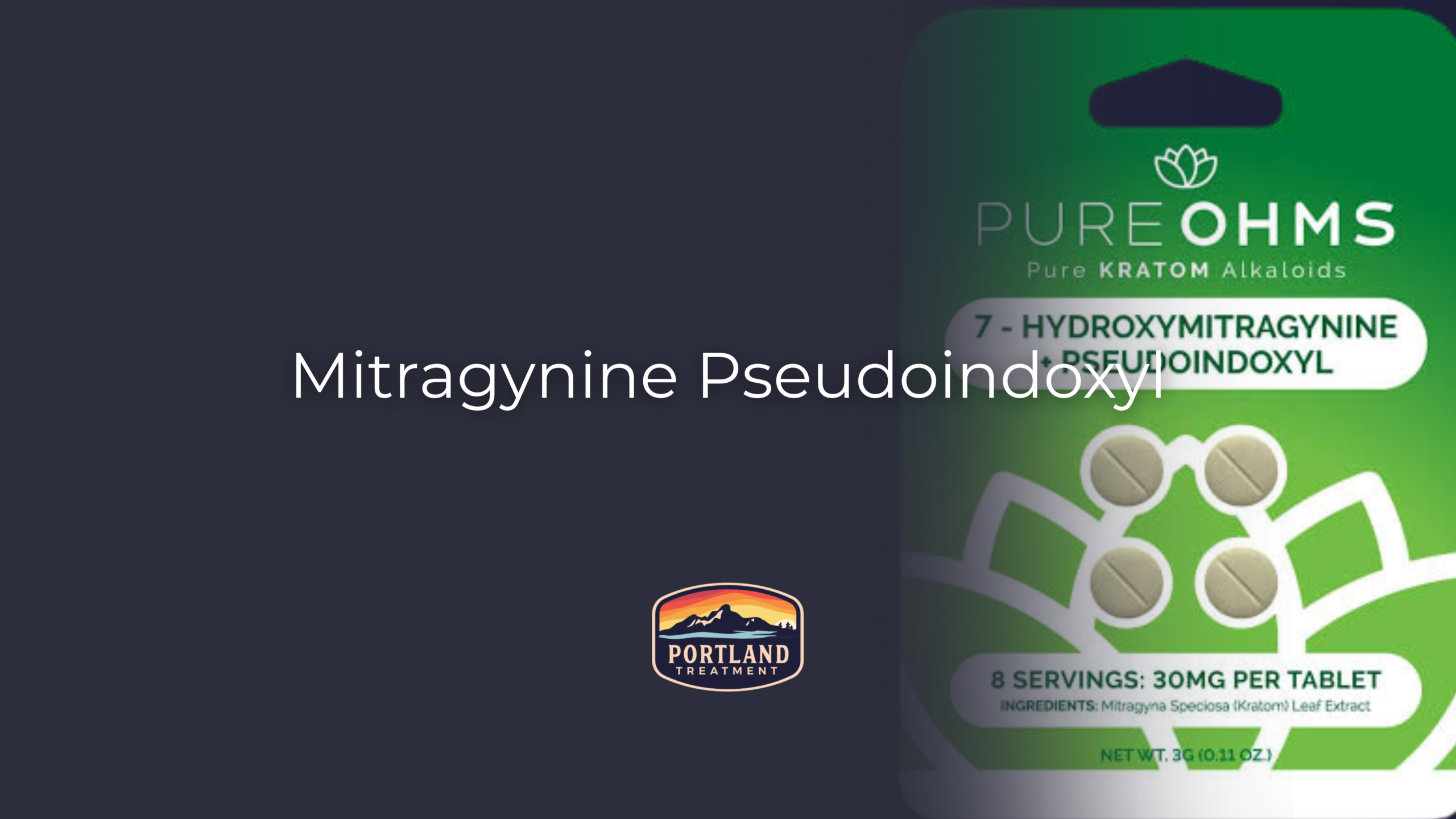

Mitragynine pseudoindoxyl, often abbreviated as MP and sometimes casually called “pseudo,” is a kratom-related compound connected to mitragynine and 7-hydroxymitragynine, also known as 7-OH. These compounds come from or are derived from Mitragyna speciosa, the plant commonly known as kratom.
Mitragynine pseudoindoxyl is not the same as ordinary kratom leaf. It is a potent opioid receptor-active compound that may appear in newer kratom-related products, including some products marketed as kratom alternatives, 7-OH products, or semi-synthetic kratom derivatives.
Researchers have described mitragynine pseudoindoxyl as a highly selective mu-opioid receptor agonist. The mu-opioid receptor is the same broad receptor system involved in the effects of traditional opioids, including pain relief, euphoria, tolerance, dependence, withdrawal, and overdose risk.
Why Is Mitragynine Pseudoindoxyl Being Discussed?
Mitragynine pseudoindoxyl has become more concerning because it is now being identified in commercial products. A 2025 study reported that products containing semi-synthetic kratom-derived compounds, including 7-OH and mitragynine pseudoindoxyl, had emerged in online sales. Researchers noted that both compounds are highly selective mu-opioid receptor agonists and may pose public health risks.
This matters because many people still think of kratom products as natural, mild, or less risky than opioids. That assumption becomes even more dangerous when products are no longer simple kratom leaf and instead contain concentrated or semi-synthetic opioid-active compounds.
Mitragynine, 7-OH, and Mitragynine Pseudoindoxyl
Mitragynine pseudoindoxyl is part of a larger kratom chemistry pathway. Mitragynine is the major alkaloid in kratom. The body can metabolize mitragynine into 7-hydroxymitragynine, and 7-OH can be further converted into mitragynine pseudoindoxyl.
| Compound | What It Is | Why It Matters |
|---|---|---|
| Mitragynine | Main alkaloid found in kratom leaf | Has opioid receptor activity but is generally less potent than 7-OH or MP |
| 7-hydroxymitragynine / 7-OH | Potent kratom-related opioid-active compound | More potent at the mu-opioid receptor than mitragynine |
| Mitragynine pseudoindoxyl / MP | 7-OH-related metabolite and semi-synthetic product compound | Highly potent opioid receptor-active compound with growing public health concern |
Mitragynine pseudoindoxyl can occur as a metabolite, but the main concern is not what the body may produce in tiny amounts. The bigger issue is concentrated or semi-synthetic products that may deliver much larger amounts than someone would encounter from traditional kratom leaf.
Is Mitragynine Pseudoindoxyl an Opioid?
Mitragynine pseudoindoxyl is best understood as an opioid-active kratom-derived compound. It is not identical to heroin, fentanyl, oxycodone, or morphine, but it interacts with opioid receptor systems involved in opioid-like effects.
Possible opioid-like effects may include:
| Possible Effect | Why It Matters |
| Euphoria or emotional relief | May reinforce repeated use |
| Sedation | Can impair driving, work, and decision-making |
| Pain relief | May increase repeated use or self-medication |
| Nausea or dizziness | Common with opioid-active substances |
| Constipation | Common opioid-related side effect |
| Tolerance | More may be needed over time |
| Dependence | Withdrawal symptoms may appear when stopping |
| Overdose risk | Risk may rise when mixed with other depressants |
Some early research suggested mitragynine pseudoindoxyl might have unusual opioid receptor activity, such as mu-opioid agonism and delta-opioid antagonism. However, that does not mean it is safe for human use outside controlled research or clinical settings.
Is Mitragynine Pseudoindoxyl FDA-Approved?
No. Mitragynine pseudoindoxyl is not FDA-approved for pain, opioid withdrawal, anxiety, sleep, opioid use disorder, or any other medical condition.
It should not be treated like a regulated medication. Products sold online, in gas stations, in vape shops, or through supplement-style retailers may have unclear ingredients, inaccurate labeling, inconsistent dosing, or contamination. A product being available for purchase does not mean it has been proven safe.
Why Mitragynine Pseudoindoxyl Products Are Risky
Mitragynine pseudoindoxyl products are concerning because they sit in a dangerous gray zone between kratom, research chemicals, and opioid-like drugs.
| Risk Factor | Why It Matters |
| Limited human data | There is no reliable safety profile for regular human use |
| Opioid receptor activity | MP acts on systems tied to tolerance, dependence, and withdrawal |
| Potency concerns | MP may be more potent than mitragynine and 7-OH in some receptor studies |
| Product labeling issues | Consumers may not know what dose or compound they are taking |
| Marketing confusion | Products may be presented as kratom, nootropics, or “legal” alternatives |
| Polysubstance danger | Mixing with alcohol, benzos, opioids, or sedatives may increase overdose risk |
| Lack of medical oversight | There is no approved dose, detox protocol, or prescribing standard |
For people with a history of opioid addiction, these products may also trigger cravings, relapse patterns, or a return to compulsive opioid-like use.
Can Mitragynine Pseudoindoxyl Cause Withdrawal?
Human data is still limited, but withdrawal is a major concern. A 2026 case report described severe early-onset withdrawal after intentional mitragynine pseudoindoxyl use. The authors noted that semisynthetic derivatives such as MP may produce rapid-onset, full-spectrum opioid-like withdrawal.
Possible withdrawal symptoms may include:
| Symptom Category | Possible Symptoms |
| Physical symptoms | Sweating, chills, body aches, nausea, vomiting, diarrhea |
| Sleep symptoms | Insomnia, restless sleep, vivid dreams |
| Mood symptoms | Anxiety, depression, irritability, panic, agitation |
| Nervous system symptoms | Restlessness, tremors, racing heart, blood pressure changes |
| Opioid-like symptoms | Runny nose, watery eyes, goosebumps, muscle aches |
| Cravings | Strong urges to use MP, 7-OH, kratom, or other opioids |
| Severe symptoms | Confusion, severe agitation, dehydration, relapse risk |
Because MP products are new and inconsistent, there is no single withdrawal timeline that applies to everyone. Symptoms may depend on the dose, frequency of use, duration of use, other substances, and the actual contents of the product.
Mitragynine Pseudoindoxyl Withdrawal Timeline
There is no standardized withdrawal timeline for mitragynine pseudoindoxyl. However, based on emerging case reports and its opioid-like activity, withdrawal may appear quickly after stopping, especially if the person has been using concentrated products.
| Stage | Possible Symptoms |
| First 12–24 hours | Anxiety, cravings, restlessness, sweating, insomnia |
| Days 1–3 | Worsening withdrawal, stomach upset, body aches, chills, agitation |
| Days 3–7 | Sleep disruption, mood swings, cravings, fatigue, diarrhea, dehydration risk |
| 1–2 weeks | Lingering anxiety, low mood, sleep problems, reduced energy |
| Several weeks or longer | Cravings, emotional instability, post-acute symptoms in some people |
This timeline is only a general guide. People using MP with 7-OH, kratom extracts, fentanyl, oxycodone, benzodiazepines, alcohol, phenibut, or other substances may have a more complex and dangerous withdrawal experience.
Can Mitragynine Pseudoindoxyl Cause Overdose?
There is not enough public human data to define a clear mitragynine pseudoindoxyl overdose profile. However, because MP is opioid receptor-active, overdose risk is a serious concern, especially when it is combined with other depressants.
Risk may increase when MP is taken with:
| Substance | Why the Combination Is Risky |
| Alcohol | Can worsen sedation and poor coordination |
| Benzodiazepines | May increase dangerous central nervous system depression |
| Opioids | Can compound opioid-like effects |
| Fentanyl | Greatly increases overdose risk |
| Sleep medications | Can worsen impairment and sedation |
| Phenibut | May increase sedation and withdrawal complexity |
| Gabapentin or pregabalin | May worsen dizziness, sedation, and impairment |
Possible opioid-related overdose signs include extreme sleepiness, slow or stopped breathing, blue or gray lips, gurgling sounds, limp body, vomiting while unconscious, or inability to wake the person.
Call 911 immediately if overdose is possible. Naloxone may help if opioid receptor activity is involved, but emergency medical care is still necessary.
Mitragynine Pseudoindoxyl vs. 7-OH
Mitragynine pseudoindoxyl is often discussed alongside 7-OH because they are chemically related and may appear in similar products.
| Category | 7-OH | Mitragynine Pseudoindoxyl |
| Full name | 7-hydroxymitragynine | Mitragynine pseudoindoxyl |
| Common shorthand | 7-OH | MP or “pseudo” |
| Relationship to kratom | Minor kratom alkaloid and mitragynine metabolite | 7-OH-related metabolite and semi-synthetic product compound |
| Opioid activity | Potent mu-opioid receptor activity | Highly selective mu-opioid receptor activity |
| Product concern | Concentrated 7-OH tablets, shots, gummies, and extracts | Newer products marketed as kratom or kratom alternatives |
| Main risk | Dependence, withdrawal, opioid-like effects, overdose concerns | Limited human data, severe withdrawal concern, opioid-like effects |
Neither 7-OH nor MP should be treated like ordinary kratom leaf. These compounds may create stronger opioid-like effects and a higher risk of dependence than traditional kratom products.
What To Do If You Have Been Using Mitragynine Pseudoindoxyl
If you have been using mitragynine pseudoindoxyl, do not assume that it is safe simply because it may be marketed as kratom-related. It may be more opioid-like than expected, and stopping suddenly may be difficult.
Consider getting professional support if you:
| Situation | Why Support May Help |
| Use MP daily or near-daily | May indicate physical dependence |
| Feel sick when you stop | Withdrawal may need clinical support |
| Use 7-OH or kratom extracts too | Withdrawal may be stronger or more confusing |
| Mix with alcohol, benzos, or opioids | Overdose risk may increase |
| Have opioid addiction history | MP may trigger relapse pathways |
| Cannot cut down | May indicate addiction or loss of control |
| Feel severe anxiety or depression | Mental health support may reduce relapse risk |
If you are experiencing confusion, severe dehydration, chest pain, hallucinations, suicidal thoughts, or overdose symptoms, seek emergency medical help immediately.
Treatment for MP, 7-OH, Kratom, and Opioid Use in Maine
At Portland Treatment, we support people struggling with kratom-related products, 7-OH, mitragynine pseudoindoxyl, opioid use, withdrawal symptoms, and co-occurring mental health concerns. Many people do not realize they are using an opioid-active substance until they try to stop and feel withdrawal symptoms.
Treatment may include clinical assessment, medical referral when needed, therapy, relapse prevention planning, coping skills, medication-assisted treatment coordination when appropriate, and support for anxiety, depression, trauma, or polysubstance use.
Recovery starts with getting clear about what is happening and building a safer plan forward.
Frequently Asked Questions About Mitragynine Pseudoindoxyl
What is mitragynine pseudoindoxyl?
Mitragynine pseudoindoxyl is a kratom-related compound connected to mitragynine and 7-hydroxymitragynine. It is opioid receptor-active and has appeared in newer kratom-related products.
Is mitragynine pseudoindoxyl the same as 7-OH?
No. Mitragynine pseudoindoxyl and 7-OH are related, but they are not the same compound. MP may form from 7-OH and is also appearing in semi-synthetic product formulations.
Is mitragynine pseudoindoxyl FDA-approved?
No. Mitragynine pseudoindoxyl is not FDA-approved for any medical use.
Can mitragynine pseudoindoxyl cause withdrawal?
Yes, withdrawal is a serious concern. Emerging reports describe opioid-like withdrawal after use of mitragynine pseudoindoxyl products.
Is mitragynine pseudoindoxyl stronger than kratom?
It should not be viewed like ordinary kratom leaf. MP is a more potent opioid receptor-active compound and may carry stronger opioid-like risks.
Can naloxone reverse mitragynine pseudoindoxyl overdose?
There is limited human data, but because MP is opioid receptor-active, naloxone may help if opioid-related overdose is occurring. Call 911 immediately and use naloxone when opioid overdose is suspected.
Can Portland Treatment help with MP or 7-OH use?
Yes. Portland Treatment supports people struggling with kratom-related products, 7-OH, MP, opioids, withdrawal, and co-occurring mental health symptoms.
Sources
Center for Forensic Science Research and Education. (2025). Mitragynine pseudoindoxyl. NPS Discovery.
https://www.cfsre.org/nps-discovery/monographs/mitragynine-pseudoindoxyl
Hill, K., Behnke, M., Cotten, S., Huestis, M. A., & McCurdy, C. R. (2025). Characterization of novel 7-hydroxymitragynine and mitragynine pseudoindoxyl product marketing. Drug and Alcohol Dependence.
https://pubmed.ncbi.nlm.nih.gov/40373645/
Kamble, S. H., Sharma, A., León, F., Chear, N. J. Y., King, T. I., Berthold, E. C., Ramanathan, S., McMahon, L. R., Avery, B. A., & McCurdy, C. R. (2020). Metabolism of a kratom alkaloid metabolite in human plasma increases its opioid potency and efficacy. ACS Pharmacology & Translational Science, 3(6), 1063–1068.
https://pmc.ncbi.nlm.nih.gov/articles/PMC7737207/
Kruegel, A. C., Gassaway, M. M., Kapoor, A., Váradi, A., Majumdar, S., Filizola, M., Javitch, J. A., & Sames, D. (2016). Synthetic and receptor signaling explorations of the mitragyna alkaloids: Mitragynine as an atypical molecular framework for opioid receptor modulators. Journal of the American Chemical Society, 138(21), 6754–6764.
https://pmc.ncbi.nlm.nih.gov/articles/PMC5189718/
Stanciu, C. N., Penders, T. M., Gnanasegaram, S. A., & Penders, A. S. (2026). Severe early-onset withdrawal following intentional use of mitragynine pseudoindoxyl. Journal of Addiction Medicine.
https://pubmed.ncbi.nlm.nih.gov/41982589/
United Nations Office on Drugs and Crime. (2025, August 29). Emergence of potent kratom-related products containing 7-hydroxymitragynine and mitragynine pseudoindoxyl.
https://www.unodc.org/LSS/Announcement/Details/d0c66623-b200-4537-9f25-7df89fbdbf8b
Váradi, A., Marrone, G. F., Palmer, T. C., Narayan, A., Szabó, M. R., Le Rouzic, V., Grinnell, S. G., Subrath, J. J., Warner, E., Kalra, S., Hunkele, A., Pagirsky, J., Eans, S. O., Medina, J. M., Xu, J., Pan, Y. X., Borics, A., Pasternak, G. W., McLaughlin, J. P., & Majumdar, S. (2016). Mitragynine/corynantheidine pseudoindoxyls as opioid analgesics with μ agonism and δ antagonism, which do not recruit β-arrestin-2. Journal of Medicinal Chemistry, 59(18), 8381–8397.
https://pmc.ncbi.nlm.nih.gov/articles/PMC5344672/
Wilson, L. L., Harris, H. M., Eans, S. O., Brice-Tutt, A. C., Cirino, T. J., Stacy, H. M., Simons, C. A., Simpson, G. G., Grinnell, S. G., Lindsley, C. W., McCurdy, C. R., McLaughlin, J. P., & Prisinzano, T. E. (2021). Kratom alkaloids, natural and semi-synthetic, show less physical dependence and ameliorate precipitated withdrawal in morphine-dependent mice. British Journal of Pharmacology, 178(9), 1888–1903.
https://pmc.ncbi.nlm.nih.gov/articles/PMC8164968/
It’s easy and free!

John Ingham
John Ingham is a respected leader and medical content writer specializing in behavioral health, addiction treatment, and other mental health. With more than a decade of experience in the recovery and treatment field, his work has been featured across leading treatment networks and educational platforms, and has contributed as a lecturer in graduate level seminars within the Steve Hicks School of Social Work at University of Texas at Austin, and undergraduate seminars at Vanderbilt University. John's work has also been recognized in public service announcements, documentaries and more, including a feature that won an Emmy Award. John has collaborated with presidential appointees in the White House, clinicians, program directors, and other leaders throughout the behavioral health space, further establishing his role as a trusted voice in the field.