MGM-15, also called DHM, DH-7OH-MIT, or dihydro-7-hydroxymitragynine, is a semi-synthetic opioid compound related to kratom alkaloids. It is structurally connected to 7-hydroxymitragynine, often called 7-OH, one of the opioid-active compounds associated with kratom. Unlike natural kratom leaf, MGM-15 is not simply a plant product. It is a modified compound designed to act strongly on opioid …
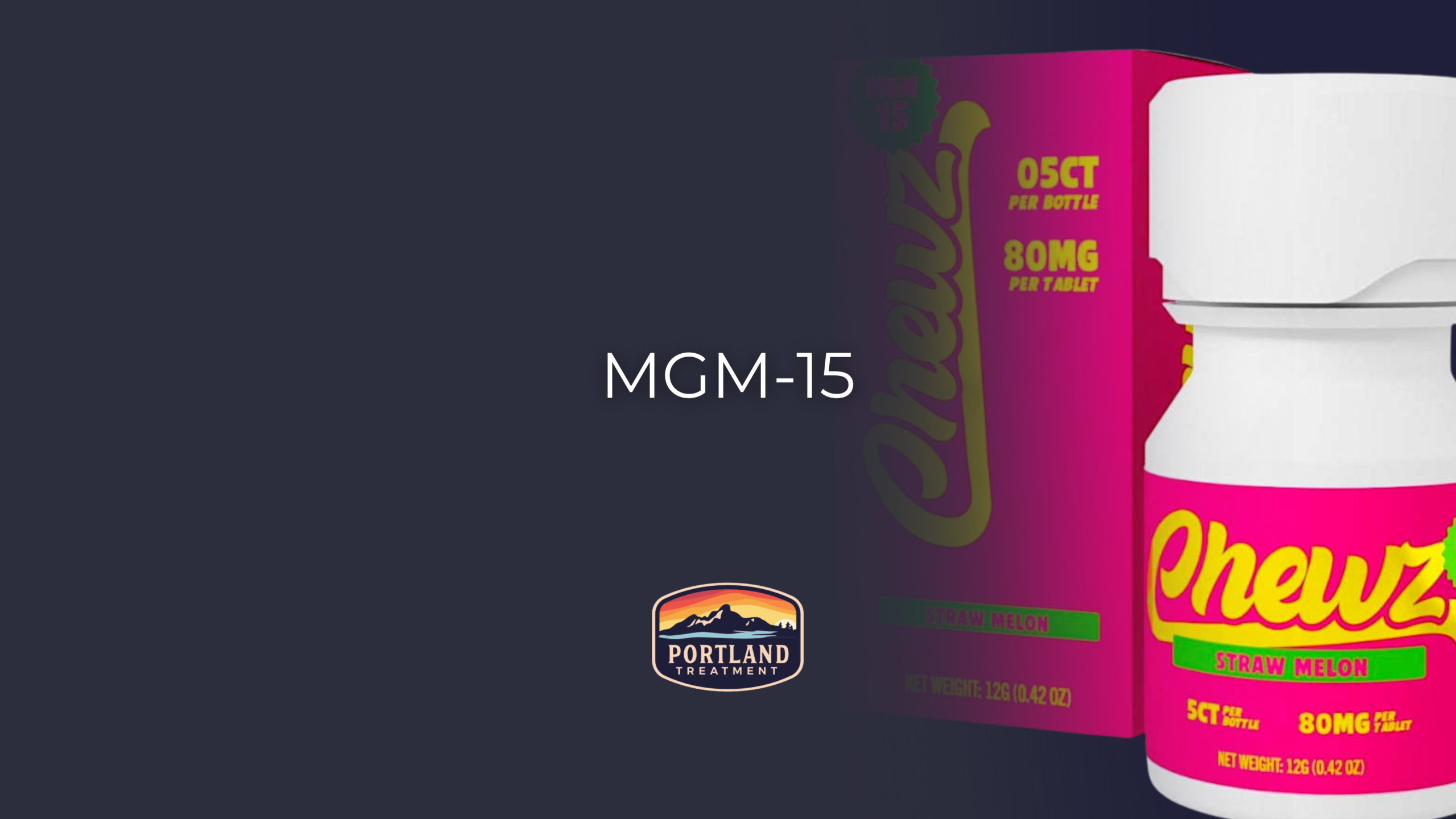

MGM-15, also called DHM, DH-7OH-MIT, or dihydro-7-hydroxymitragynine, is a semi-synthetic opioid compound related to kratom alkaloids. It is structurally connected to 7-hydroxymitragynine, often called 7-OH, one of the opioid-active compounds associated with kratom.
Unlike natural kratom leaf, MGM-15 is not simply a plant product. It is a modified compound designed to act strongly on opioid receptors. Research has described MGM-15 as having higher binding affinity at human mu-opioid and delta-opioid receptors than 7-hydroxymitragynine, raising concerns about stronger opioid-like effects and risks.
MGM-15 is not FDA-approved for pain, opioid withdrawal, anxiety, sleep, opioid use disorder, or any other medical condition. Products sold online or in stores may be labeled as research chemicals, kratom alternatives, 7-OH products, or opioid-like supplements, but that does not mean they are safe.
Why Are People Talking About MGM-15?
MGM-15 has gained attention because it appears to be part of a newer wave of high-potency, kratom-related synthetic or semi-synthetic opioid products. These products are sometimes marketed in ways that make them sound natural, legal, or less dangerous than traditional opioids.
That can be misleading.
Natural kratom itself can carry dependence, withdrawal, and safety risks. MGM-15 is even more concerning because it is a concentrated, modified opioid-active compound with very limited human safety data. A 2025 analysis of commercially available MGM-labeled tablets found that tablets contained about 10.9 mg of MGM-15 and no naturally occurring kratom alkaloids, emphasizing that some products being sold are not simply kratom leaf or ordinary kratom extract.
MGM-15 and 7-OH: What Is the Connection?
MGM-15 is closely related to 7-hydroxymitragynine, also known as 7-OH. 7-OH is one of the more potent opioid-active alkaloids associated with kratom. MGM-15 is a semi-synthetic derivative of 7-OH, meaning it is chemically modified from a kratom-related compound.
| Substance | What It Is | Main Concern |
|---|---|---|
| Kratom leaf | Plant material from Mitragyna speciosa | Can still cause dependence, withdrawal, and drug interactions |
| Mitragynine | Primary kratom alkaloid | Opioid receptor activity and safety concerns |
| 7-hydroxymitragynine / 7-OH | More potent kratom-related opioid-active compound | Higher opioid-like risk than plain kratom leaf |
| MGM-15 / DHM | Semi-synthetic 7-OH-related opioid compound | Limited human safety data, stronger receptor activity, possible addiction and withdrawal risk |
This distinction matters because many people hear “kratom-derived” and assume the product is mild or natural. MGM-15 should not be viewed that way. It is better understood as an unapproved opioid-active compound with unknown human risk.
Is MGM-15 an Opioid?
MGM-15 is generally described as an opioid-acting compound because it binds to opioid receptors, including the mu-opioid receptor and delta-opioid receptor. These are the same broad receptor systems involved in opioid effects such as pain relief, euphoria, sedation, tolerance, dependence, and withdrawal.
That does not mean MGM-15 is identical to heroin, fentanyl, oxycodone, or morphine. However, it does mean MGM-15 may affect the body in opioid-like ways.
Possible opioid-like effects may include:
| Possible Effect | Why It Matters |
| Relaxation or sedation | May impair judgment or driving |
| Pain relief | Can reinforce repeated use |
| Euphoria | May increase misuse risk |
| Nausea or dizziness | Common with opioid-active substances |
| Constipation | Common opioid-related effect |
| Tolerance | More may be needed over time |
| Physical dependence | Withdrawal may occur when stopping |
| Respiratory depression | Slowed breathing can become dangerous, especially with other depressants |
Because MGM-15 is not an approved medication, there is no established safe dose, no medical prescribing standard, and no reliable human risk profile.
Is MGM-15 Legal?
The legal status of MGM-15 may vary by state and may change quickly as regulators respond to new kratom-derived and semi-synthetic opioid products. A substance can be unregulated or newly emerging and still be dangerous.
The FDA has previously warned that kratom is not lawfully marketed as a drug product, dietary supplement, or food additive in conventional food. The FDA has also warned about 7-hydroxymitragynine products and has stated that concentrated 7-OH products may pose serious opioid-like risks.
For consumers, the main issue is safety. A product being sold online or in a smoke shop does not mean it has been tested, approved, or proven safe.
MGM-15 Intake Methods
| Intake Method | How It May Be Used | Why It Is Risky |
|---|---|---|
| Tablets or pressed pills | MGM-15 may be sold in tablet form, sometimes marketed as a kratom-related or 7-OH-style product. | Dose strength may be unclear, labeling may be unreliable, and tablets can create a false sense of safety because they look like regulated medications. |
| Capsules | Powdered or measured MGM-15 may be placed into capsules for swallowing. | Capsules can hide the actual contents, purity, and dose. Delayed onset may lead some people to take more before the first dose fully takes effect. |
| Powder | MGM-15 or related compounds may be sold or handled as a loose powder. | Powdered research chemicals can be difficult to measure accurately, increasing the risk of taking too much. |
| Liquid solutions | Some users may dissolve MGM-15 into a liquid for oral use or dosing. | Liquid concentration can be inconsistent, especially if mixed without lab-grade equipment or clear dosing information. |
| Sublingual use | A person may place MGM-15 under the tongue to try to speed absorption. | Faster absorption may increase intensity, impairment, and dependence risk, especially with an unapproved opioid-active compound. |
| Mixed with kratom or 7-OH products | MGM-15 may be used alongside kratom extracts, 7-hydroxymitragynine products, or other opioid-like substances. | Combining opioid-active compounds can increase sedation, tolerance, withdrawal risk, and possible overdose danger. |
| Combined with other substances | MGM-15 may be taken with alcohol, benzodiazepines, opioids, gabapentin, phenibut, or sleep medications. | Mixing central nervous system depressants may increase the risk of heavy sedation, impaired breathing, blackouts, and emergency overdose situations. |
Because MGM-15 is not an FDA-approved medication, there is no established safe dose, no approved route of administration, and no medical standard for how it should be taken. Any use outside a controlled research setting may carry unpredictable risks.
Why MGM-15 Products Are Concerning
MGM-15 is concerning for several reasons:
| Concern | Explanation |
| Limited human data | MGM-15 has not been adequately studied in humans |
| Opioid receptor activity | It acts on receptor systems linked to addiction and withdrawal |
| Unknown dosing | There is no approved dose or medical guidance |
| Product inconsistency | Online or retail products may be mislabeled or contaminated |
| High potency concerns | Research suggests stronger opioid receptor binding than 7-OH |
| Polysubstance risk | Combining with alcohol, benzodiazepines, opioids, or sedatives may increase danger |
| False safety claims | Marketing may make the drug seem natural, legal, or harmless |
A major danger with emerging drugs is that people may use them before the medical community fully understands the risks. By the time clear human data exists, people may already be experiencing dependence, withdrawal, overdose, or relapse.
Can MGM-15 Cause Addiction?
MGM-15 may carry addiction risk because it acts on opioid receptor systems involved in reward, relief, and reinforcement. Addiction is not only about whether a substance is illegal or prescribed. It is about whether use becomes difficult to control despite harm.
Signs that MGM-15 use may be becoming a problem include:
| Sign | What It May Look Like |
| Taking more than planned | Using higher doses or more often than intended |
| Cravings | Feeling preoccupied with the next dose |
| Tolerance | Needing more to get the same effect |
| Withdrawal avoidance | Using mainly to avoid feeling sick |
| Failed attempts to stop | Trying to quit but returning to use |
| Secrecy | Hiding use from family or providers |
| Polysubstance use | Mixing MGM-15 with alcohol, opioids, benzos, kratom, or other drugs |
| Functional problems | Work, school, family, health, or legal problems related to use |
People with a history of opioid use disorder may be especially vulnerable because MGM-15 may activate familiar opioid reward and dependence pathways.
Can MGM-15 Cause Withdrawal?
There is not enough human research to define a clear MGM-15 withdrawal timeline. However, because MGM-15 is an opioid-active compound related to 7-OH, withdrawal is a reasonable concern after regular or high-dose use.
Possible opioid-like withdrawal symptoms may include:
| Symptom Category | Possible Symptoms |
| Physical symptoms | Sweating, chills, body aches, nausea, vomiting, diarrhea |
| Sleep symptoms | Insomnia, restless sleep, vivid dreams |
| Mood symptoms | Anxiety, depression, irritability, agitation |
| Nervous system symptoms | Restlessness, tremors, racing heart |
| Cravings | Strong urges to take more MGM-15, kratom, 7-OH, or opioids |
| Functional symptoms | Trouble working, eating, sleeping, or managing responsibilities |
Withdrawal can be especially difficult when MGM-15 is used alongside kratom, 7-OH, fentanyl, oxycodone, benzodiazepines, alcohol, phenibut, or other substances.
MGM-15 vs. Kratom, 7-OH, and Opioids
MGM-15 is often discussed alongside kratom and 7-OH, but it should not be treated as the same thing.
| Substance | Source / Type | Risk Level |
| Plain kratom leaf | Plant-based kratom material | Can still cause dependence, withdrawal, and interactions |
| Kratom extract | Concentrated kratom product | Higher risk than plain leaf due to stronger dosing |
| 7-OH | Potent kratom-related opioid-active compound | Higher opioid-like concern |
| MGM-15 | Semi-synthetic 7-OH-related opioid compound | Limited safety data, possible stronger opioid effects |
| Prescription opioids | FDA-approved medications when prescribed | Known risks, regulated dosing, medical oversight |
| Illicit fentanyl | Potent synthetic opioid | Very high overdose risk |
The key issue is that MGM-15 exists in a gray zone. It may be sold in consumer products, but it does not have the safety testing, dosing standards, or medical oversight that approved medications require.
Can MGM-15 Cause Overdose?
There is limited public human data on MGM-15 overdose, but opioid-like receptor activity raises serious concern. Any opioid-active substance may become more dangerous when taken in high amounts, used unpredictably, or mixed with other depressants.
Overdose risk may increase when MGM-15 is combined with:
| Substance | Why the Combination Is Risky |
| Alcohol | Can worsen sedation and breathing problems |
| Benzodiazepines | Can increase respiratory depression risk |
| Opioids | May compound opioid effects |
| Fentanyl | Greatly increases overdose risk |
| Sleep medications | May worsen sedation |
| Phenibut | May increase central nervous system depression |
| Gabapentin or pregabalin | May worsen sedation and impairment |
Signs of a possible opioid-related overdose include extreme sleepiness, slow or stopped breathing, blue or gray lips, gurgling sounds, limp body, vomiting while unconscious, or being unable to wake the person.
Call 911 immediately if overdose is possible. Naloxone may help reverse opioid-related overdose, but emergency medical care is still necessary.
What To Do If You Have Been Using MGM-15
If you have been using MGM-15, avoid assuming it is safe to stop abruptly or continue using without support. Because human data is limited, it can be hard to predict withdrawal symptoms, dose-related risk, or interactions.
Consider seeking medical or clinical support if you:
| Situation | Why Support May Help |
| Use MGM-15 daily | May indicate physical dependence |
| Feel withdrawal when stopping | May require a safer plan |
| Use other opioids or kratom too | Withdrawal may be more complex |
| Mix with alcohol or benzos | Overdose risk may be higher |
| Cannot cut down | May indicate addiction |
| Feel intense anxiety or depression | Mental health support may reduce relapse risk |
| Have a history of opioid addiction | MGM-15 may trigger relapse patterns |
If you are already experiencing severe withdrawal, confusion, chest pain, suicidal thoughts, hallucinations, or overdose symptoms, seek emergency medical help.
Treatment for MGM-15, Kratom, 7-OH, and Opioid Use in Maine
At Portland Treatment, we support people struggling with opioid use, kratom use, 7-OH products, research chemicals, withdrawal symptoms, and co-occurring mental health concerns. Emerging substances like MGM-15 can be especially confusing because people may not know whether they are dealing with a supplement, research chemical, opioid, or something else entirely.
Treatment may involve clinical assessment, medical referral when needed, therapy, relapse prevention planning, coping skills, medication-assisted treatment coordination when appropriate, and support for anxiety, depression, trauma, or polysubstance use.
Recovery is not about judging how someone got here. It is about helping them get safe, understand what they are using, and build a realistic plan for long-term stability.
Frequently Asked Questions About MGM-15
What is MGM-15?
MGM-15 is a semi-synthetic opioid-active compound related to 7-hydroxymitragynine, a potent kratom-related alkaloid. It may also be called DHM, DH-7OH-MIT, or dihydro-7-hydroxymitragynine.
Is MGM-15 the same as kratom?
No. MGM-15 is not the same as plain kratom leaf. It is a semi-synthetic compound related to kratom alkaloids and appears to have stronger opioid receptor activity than ordinary kratom products.
Is MGM-15 FDA-approved?
No. MGM-15 is not FDA-approved for pain, anxiety, opioid withdrawal, opioid addiction, or any other medical use.
Is MGM-15 addictive?
MGM-15 may carry addiction risk because it acts on opioid receptor systems linked to reward, tolerance, dependence, and withdrawal.
Can MGM-15 cause withdrawal?
Human data is limited, but withdrawal is a serious concern because MGM-15 is an opioid-active compound. People using it regularly may experience opioid-like withdrawal symptoms when stopping.
Is MGM-15 stronger than 7-OH?
Research suggests MGM-15 has greater binding affinity at human mu-opioid and delta-opioid receptors than 7-hydroxymitragynine, which raises concerns about stronger opioid-like effects and risks.
Can Portland Treatment help with MGM-15 use?
Yes. Portland Treatment can help people struggling with kratom, 7-OH, MGM-15, opioid use, withdrawal concerns, and co-occurring mental health symptoms.
Sources
Gour, A., Botchway, F. A., Oliver, C., D’Orazio, J. L., Huestis, M. A., & McCurdy, C. R. (2025). From kratom to semi-synthetic opioids: The rise and risks of MGM-15. Drug Testing and Analysis.
https://pubmed.ncbi.nlm.nih.gov/40936282/
Matsumoto, K., Horie, S., Ishikawa, H., Takayama, H., Aimi, N., Ponglux, D., & Watanabe, K. (2014). Orally active opioid μ/δ dual agonist MGM-16, a derivative of the indole alkaloid mitragynine, exhibits potent antiallodynic effect on neuropathic pain in mice. Journal of Pharmacology and Experimental Therapeutics, 348(3), 383–392.
https://pmc.ncbi.nlm.nih.gov/articles/PMC6067406/
Obeng, S., Wilkerson, J. L., León, F., Reeves, M. E., Restrepo, L. F., Gamez-Jimenez, L. R., Patel, A., Behnke, M., Chear, N. J. Y., Ramanathan, S., Sharma, A., McCurdy, C. R., & McMahon, L. R. (2021). Pharmacological comparison of mitragynine and 7-hydroxymitragynine: In vitro affinity and efficacy for μ-opioid receptor and opioid-like behavioral effects in rats. Journal of Pharmacology and Experimental Therapeutics, 376(3), 410–427.
https://pubmed.ncbi.nlm.nih.gov/33370944/
U.S. Food and Drug Administration. (2024). FDA and kratom.
https://www.fda.gov/news-events/public-health-focus/fda-and-kratom
U.S. Food and Drug Administration. (2025, July 29). FDA recommends scheduling action to control 7-hydroxymitragynine, a potent opioid in kratom products.
https://www.fda.gov/news-events/press-announcements/fda-recommends-scheduling-action-control-7-hydroxymitragynine-potent-opioid-kratom-products
U.S. Food and Drug Administration. (2025, July 29). 7-OH, a concentrated byproduct of kratom.
https://www.fda.gov/food/information-select-dietary-supplement-ingredients-and-other-substances/7-oh-concentrated-byproduct-kratom
Váradi, A., Marrone, G. F., Palmer, T. C., Narayan, A., Szabó, M. R., Le Rouzic, V., Grinnell, S. G., Subrath, J. J., Warner, E., Kalra, S., Hunkele, A., Pagirsky, J., Eans, S. O., Medina, J. M., Xu, J., Pan, Y. X., Borics, A., Pasternak, G. W., McLaughlin, J. P., & Majumdar, S. (2016). Mitragynine/corynantheidine pseudoindoxyls as opioid analgesics with μ agonism and δ antagonism, which do not recruit β-arrestin-2. Journal of Medicinal Chemistry, 59(18), 8381–8397.
https://pmc.ncbi.nlm.nih.gov/articles/PMC5138496/
It’s easy and free!

John Ingham
John Ingham is a respected leader and medical content writer specializing in behavioral health, addiction treatment, and other mental health. With more than a decade of experience in the recovery and treatment field, his work has been featured across leading treatment networks and educational platforms, and has contributed as a lecturer in graduate level seminars within the Steve Hicks School of Social Work at University of Texas at Austin, and undergraduate seminars at Vanderbilt University. John's work has also been recognized in public service announcements, documentaries and more, including a feature that won an Emmy Award. John has collaborated with presidential appointees in the White House, clinicians, program directors, and other leaders throughout the behavioral health space, further establishing his role as a trusted voice in the field.