Products sold at gas stations, smoke shops, convenience stores, and online may be marketed as energy boosters, mood enhancers, pain-relief products, nootropics, or natural alternatives to opioids. They may come in bottles, tablets, capsules, gummies, shots, drink mixes, or small packages that look more like supplements than potentially addictive drugs. These products are often collectively …
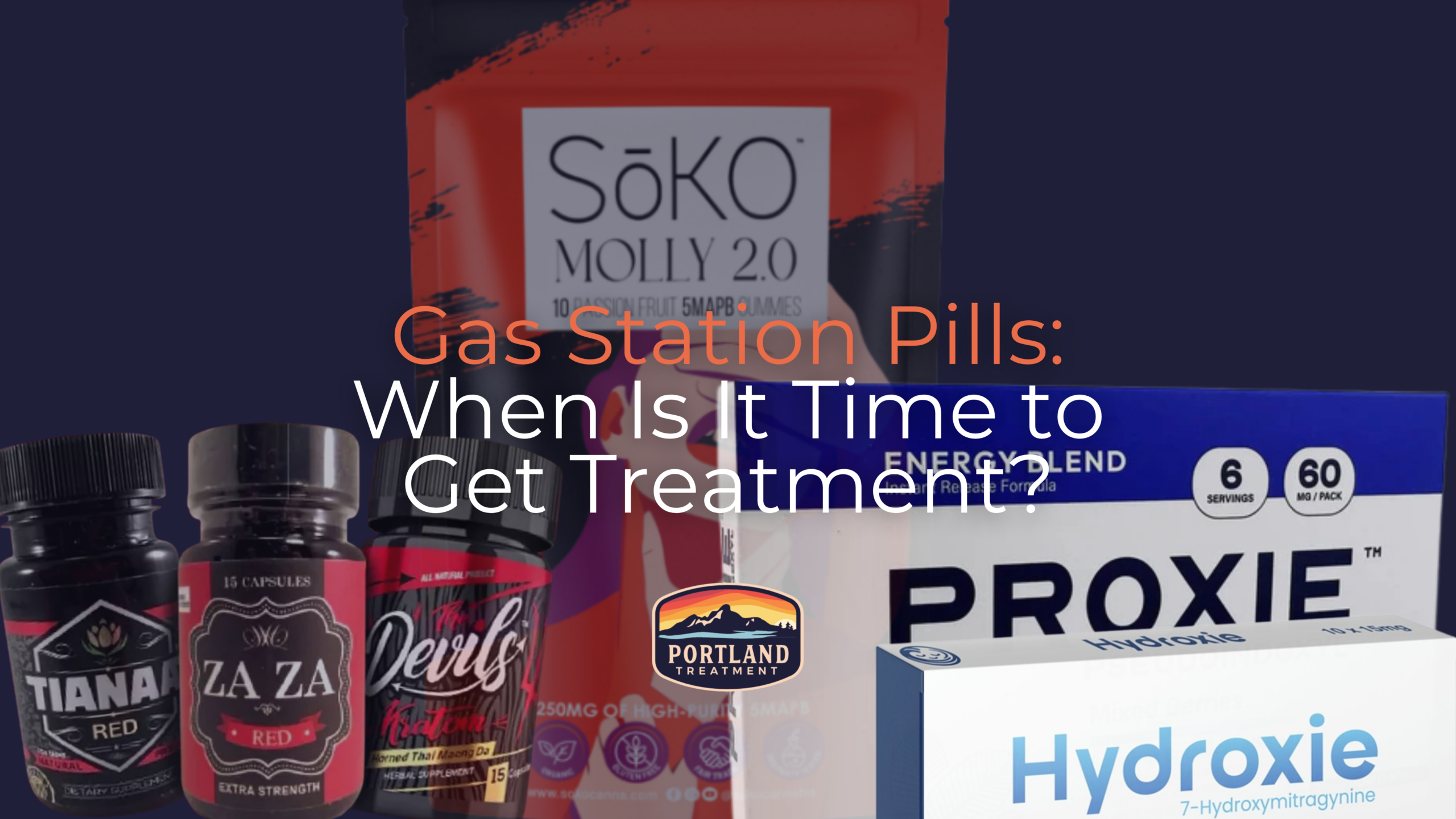

Products sold at gas stations, smoke shops, convenience stores, and online may be marketed as energy boosters, mood enhancers, pain-relief products, nootropics, or natural alternatives to opioids. They may come in bottles, tablets, capsules, gummies, shots, drink mixes, or small packages that look more like supplements than potentially addictive drugs.
These products are often collectively called gas station pills, although they are not all pills and do not all contain the same ingredients. Gas station pills and similar retail products may contain substances such as:
- Kratom or concentrated kratom extracts
- 7-hydroxymitragynine, commonly called 7-OH
- New kratom-related compounds such as MGM-15
- Tianeptine products such as ZaZa, Tianaa, Pegasus, Neptune’s Fix, or TD Red
- Kratom-containing tonics such as Feel Free
- Proprietary blends with unclear or changing ingredients
These substances are not interchangeable. Their strength, ingredients, effects, and risks can vary substantially.
However, many gas station pills have one important concern in common: repeated use can lead to tolerance, physical dependence, withdrawal, cravings, compulsive use, and worsening mental health.
The most important question may not be exactly what category the product belongs to. It may be whether using it has become difficult to control.
What Are Gas Station Pills?
“Gas station pills” is an informal umbrella term for psychoactive products sold without a traditional prescription at places such as:
- Gas stations
- Convenience stores
- Smoke shops
- Vape stores
- Supplement shops
- Online marketplaces
Products may be promoted as:
- Natural energy supplements
- Mood-support products
- Focus or productivity aids
- Pain-relief supplements
- Alcohol alternatives
- Relaxation products
- Nootropics
- Opioid-withdrawal aids
- Enhanced kratom products
The packaging may make a product appear regulated, tested, medically approved, or safer than illicit drugs. That is not necessarily the case.
A product can be sold openly and still contain an addictive, unapproved, highly concentrated, or inaccurately labeled substance. Potency and ingredients may also vary between brands, formulations, and individual batches.
Portland Treatment has separate resources explaining many of these substances in greater detail:
- Kratom addiction and treatment in Maine
- What is 7-OH?
- 7-OH withdrawal and detox
- What is MGM-15?
- MGM-15 vs. MGM-16
- Feel Free drinks and kratom tonics
- Gas station heroin, ZaZa, and tianeptine
This page focuses on a different question:
When has using gas station pills become serious enough to seek treatment?
Can Portland Treatment Help?
Portland Treatment provides structured outpatient addiction care in Biddeford, Maine, for adults struggling with kratom, 7-OH, tianeptine, emerging opioid-like substances, and polysubstance use.
Our admissions team can help you discuss:
- What product you are taking
- How frequently you use it
- Whether you are experiencing withdrawal
- Whether medical stabilization or detox may be needed first
- Whether PHP or IOP may be appropriate after stabilization
- How insurance may help cover treatment
You do not need to know exactly what was in the product before calling. Bring the package, ingredient label, receipt, or a clear photo when possible.
Not All Gas Station Products Carry the Same Risks
The term gas station pills can describe very different substances. Someone may be using traditional kratom capsules, concentrated 7-OH tablets, tianeptine pills, a bottled kratom tonic, or a newer compound with limited human safety research.
Understanding the product matters, but people should not wait for perfect certainty before asking for help.
Kratom
Kratom is made from the leaves of Mitragyna speciosa. It may be sold as:
- Powder
- Capsules
- Tea
- Gummies
- Tablets
- Liquid shots
- Concentrated extracts
Some people begin using kratom for pain, energy, anxiety, opioid withdrawal, or an attempt to avoid returning to other opioids. Regular use can still lead to tolerance, dependence, cravings, withdrawal, and compulsive use.
For a full discussion of kratom dependence and treatment options, visit Portland Treatment’s kratom addiction treatment page.
7-OH
7-OH, or 7-hydroxymitragynine, is an opioid-active compound related to kratom.
Although small amounts may occur naturally in kratom, many newer retail products contain isolated, enhanced, or highly concentrated 7-OH. The FDA has warned consumers about concentrated 7-OH products, including tablets, gummies, shots, drink mixes, and other products marketed as kratom alternatives or supplements.
People using these products regularly may experience tolerance, withdrawal, cravings, and difficulty stopping. For information focused specifically on symptoms and stopping use, read 7-OH Withdrawal and Detox.
MGM-15
MGM-15 is an emerging semi-synthetic, opioid-active compound related to 7-OH. Human safety information remains limited, and MGM-15 does not have an established safe dose or approved medical use.
Because Portland Treatment already has a dedicated MGM-15 article, the most important question on this page is not its chemistry. It is whether MGM-15 use has become frequent, compulsive, expensive, or necessary to prevent withdrawal.
Readers comparing newer kratom-related compounds can also review MGM-15 vs. MGM-16.
Feel Free and Other Kratom Tonics
Feel Free and similar bottled tonics may be marketed as wellness drinks, social tonics, mood products, or alternatives to alcohol. A drink can still contribute to dependence.
Someone may begin by using one bottle occasionally and gradually start:
- Drinking it every day
- Taking multiple bottles
- Using it before work
- Taking it to manage anxiety or stress
- Feeling sick or emotionally unstable without it
- Hiding how much they drink or spend
The warning signs are similar to those associated with other addictive gas station products: tolerance, withdrawal, secrecy, cravings, unsuccessful attempts to quit, and continued use despite consequences.
Tianeptine
Tianeptine is often called “gas station heroin”. It may be sold under product names such as:
- ZaZa
- Tianaa
- Pegasus
- Neptune’s Fix
- TD Red
- Other mood, energy, or nootropic brands
Tianeptine is not approved by the FDA for any medical use in the United States. When taken in high or repeated doses, its effects and withdrawal may resemble opioid intoxication and opioid withdrawal.
Someone using tianeptine does not need to wait until they experience an overdose, hospitalization, or severe withdrawal before seeking help.
Nine Signs It May Be Time to Get Treatment
You do not need to use an illegal drug, receive a formal addiction diagnosis, or reach a life-threatening crisis before asking for help.
Treatment may be appropriate when a legal or easily purchased product has become difficult to control or has begun affecting your health, emotions, finances, relationships, work, or recovery.
1. You Are Using Gas Station Pills Every Day
Daily use is one of the clearest signs that a product has moved beyond occasional experimentation. Someone may begin taking a kratom shot, Feel Free tonic, 7-OH tablet, MGM-15 product, or tianeptine pill only on difficult days.
Over time, it may become part of:
- Every morning
- Every work shift
- Every evening
- Every social situation
- Every attempt to sleep
- Every effort to avoid withdrawal
Daily use does not automatically mean someone has a substance use disorder. However, it can increase the risk of physical dependence, tolerance, withdrawal, and psychological reliance. The pattern becomes especially concerning when someone organizes their schedule around obtaining, carrying, or taking the next dose.
2. You Keep Increasing the Dose
Tolerance occurs when the same amount no longer produces the effect it once did. Someone who originally used one capsule, tablet, shot, or bottle may begin taking:
- More at one time
- Stronger formulations
- Doses closer together
- Multiple brands or products
- Concentrated extracts instead of traditional kratom
- Additional doses to extend the effects
Dose increases may happen gradually enough that the person does not immediately recognize how much their use has changed.
Ask yourself:
Am I taking substantially more than I was one or two months ago?
A pattern of increasing use may be a reason to seek an assessment before the problem becomes more severe.
3. You Experience Withdrawal Between Doses
Withdrawal can indicate that the body has adapted to the substance. Possible withdrawal symptoms from opioid-active gas station products may include:
- Restlessness
- Sweating
- Chills
- Runny nose
- Watery eyes
- Muscle aches
- Body pain
- Nausea
- Vomiting
- Diarrhea
- Irritability
- Anxiety
- Depression
- Insomnia
- Fatigue
- Strong cravings
- Rapid heartbeat
- Difficulty concentrating
The exact symptoms can depend on the substance, dose, frequency of use, duration of use, and whether other drugs are involved. Some people begin dosing immediately upon waking or wake during the night to use because withdrawal has already started. That pattern warrants a clinical conversation, even when the product was originally purchased legally.
4. You Use It to Feel Normal Rather Than to Feel High
A major shift occurs when someone no longer takes the product primarily for energy, relaxation, pain relief, or euphoria.
Instead, they take it to:
- Get out of bed
- Stop feeling sick
- Make it through work
- Reduce panic or irritability
- Avoid withdrawal
- Fall asleep
- Interact normally with family
- Feel emotionally stable
At this stage, the person may not feel intoxicated after taking the product. They may simply feel temporarily less unwell. Using a substance to return to a baseline level of functioning is a common sign of physical or psychological dependence.
5. You Hide Purchases or Use
Secrecy may develop before someone fully acknowledges that their use has become a problem.
This can include:
- Throwing away packaging before going home
- Hiding bottles, tablets, or capsules
- Paying in cash to conceal purchases
- Lying about how much was spent
- Visiting multiple stores
- Having products shipped to another address
- Taking doses privately
- Downplaying how often the product is used
Shame can make people reluctant to ask for help, particularly when they feel embarrassed about becoming dependent on something sold at a gas station or smoke shop.
Dependence is a health concern, not a moral failure. Honest assessment is a step toward regaining control.
6. You Mix Gas Station Pills With Other Substances
Combining gas station pills with other substances can substantially increase risk and unpredictability. Concerning combinations may include gas station products with:
- Alcohol
- Prescription opioids
- Heroin or fentanyl
- Benzodiazepines such as Xanax, Ativan, or Klonopin
- Gabapentin
- Pregabalin
- Sleep medications
- Muscle relaxers
- Phenibut
- Other sedating supplements
- Multiple kratom, 7-OH, or tianeptine products
Several of these substances can increase sedation, impairment, loss of consciousness, or breathing problems when combined.
You do not need to understand the exact interaction before asking for help. Regularly combining psychoactive products is enough reason to speak honestly with an addiction or medical professional.
7. You Have Tried and Failed to Quit
Many people attempt to stop gas station pills on their own. They may:
- Promise that the current package will be the last
- Reduce the dose temporarily and then return to prior use
- Switch brands instead of stopping
- Replace tianeptine with kratom
- Replace kratom extracts with 7-OH
- Stop briefly and return to use during stress
- Resume use when withdrawal becomes overwhelming
- Continue buying products despite deciding not to
An unsuccessful attempt does not mean someone lacks willpower. It may mean the current plan does not provide enough support for withdrawal, cravings, anxiety, depression, pain, sleep problems, or relapse prevention. Treatment can help identify what repeatedly pulls someone back into use and create a more realistic plan for moving forward.
8. Anxiety or Depression Is Getting Worse
Some people begin using gas station products because they are already struggling with:
- Anxiety
- Depression
- Trauma
- Chronic stress
- Grief
- Pain
- Fatigue
- Sleep problems
- Opioid cravings
- Difficulty concentrating
The product may appear to help at first.
Over time, repeated use, withdrawal, sleep disruption, financial strain, and fear of running out may worsen the same symptoms the person was trying to manage.
Warning signs may include:
- Panic between doses
- Severe irritability
- Loss of motivation
- Emotional numbness
- Increasing isolation
- Depression during withdrawal
- Inability to sleep without using
- Feeling hopeless about quitting
- Thoughts of self-harm
Portland Treatment supports people with substance use and co-occurring mental health concerns. Addressing both sides of the problem may help reduce the risk of returning to use.
Anyone experiencing suicidal thoughts, an immediate mental health crisis, or a risk of harming themselves or another person should call or text 988 or seek emergency assistance.
9. Your Use Is Affecting Work, Money, or Relationships
Gas station products can become expensive quickly, especially as tolerance increases. Someone may spend money intended for:
- Rent
- Utilities
- Groceries
- Transportation
- Childcare
- Medical care
- Savings
- Debt payments
Other warning signs may include:
- Missing work
- Leaving work to purchase more
- Struggling to perform without a dose
- Arguments about money or secrecy
- Driving while impaired
- Losing interest in family activities
- Neglecting responsibilities
- Returning to opioid use after attempting to quit
The amount spent is not the only concern. The broader question is whether buying and using the product has become more important than health, relationships, responsibilities, or personal values.
When Medical Evaluation May Be Needed
Not everyone using kratom, 7-OH, MGM-15, Feel Free, or tianeptine requires hospitalization or medical detox. Some people may be appropriate for outpatient treatment after an assessment. Others may need medical stabilization or supervised withdrawal care before entering PHP or IOP. Medical evaluation may be especially important when someone:
- Uses tianeptine, 7-OH, MGM-15, or strong kratom extracts throughout the day
- Wakes during the night to take another dose
- Experiences severe vomiting or diarrhea
- Cannot keep fluids down
- Shows signs of dehydration
- Experiences chest pain or an irregular heartbeat
- Has a seizure
- Becomes confused or severely agitated
- Loses consciousness
- Has slow, shallow, or difficult breathing
- Uses alcohol, benzodiazepines, opioids, or sedatives at the same time
- Has a serious medical condition
- Is pregnant
- Has a history of overdose
- Experiences suicidal thoughts or severe depression
- Has returned to fentanyl, heroin, or prescription opioids during withdrawal
Call 911 immediately if someone:
- Cannot be awakened
- Is having a seizure
- Has stopped breathing
- Is breathing slowly or irregularly
- Has blue, gray, or pale lips or skin
- Is making choking or gurgling sounds
- Has collapsed or lost consciousness
For a suspected poisoning or serious reaction in the United States, call Poison Help at 1-800-222-1222.
Do not assume that someone will safely sleep off a possible overdose.
Do You Need Detox for Gas Station Pills?
Whether someone needs detox depends on more than the name printed on the product.
An assessment may consider:
- The product or substance being used
- The listed and suspected ingredients
- Dose and frequency
- Length of use
- Previous withdrawal symptoms
- Medical history
- Mental health symptoms
- Opioid use history
- Other substances or medications
- Home environment
- Ability to remain safe between appointments
Portland Treatment is a PHP and IOP provider and does not operate an onsite medical detox unit.
When medically supervised withdrawal is needed first, Portland Treatment can help coordinate a referral to an appropriate detox or inpatient provider. Clients may then transition into Portland Treatment’s PHP or IOP after they are medically stable.
Learn more about medical detox and withdrawal management.
How Portland Treatment Can Help
Portland Treatment provides structured outpatient addiction care at:
6 Digital Drive
Biddeford, ME 04005
Treatment options include:
- Partial Hospitalization Programming
- Intensive Outpatient Programming
- Individual therapy
- Group therapy
- Family support when appropriate
- Medication management
- Co-occurring mental health support
- Relapse-prevention planning
- Recovery skill development
- Case management
- Detox and medical referrals when needed
Portland Treatment works with people struggling with substance use and co-occurring mental health symptoms. Many people using gas station pills did not intend to develop dependence. You may have started using a product to:
- Stay away from fentanyl
- Get through work
- Manage pain
- Reduce anxiety
- Stop drinking
- Improve your mood
- Increase energy
- Manage opioid withdrawal
- Avoid returning to another substance
Treatment is not about shaming those decisions. It is about understanding what is happening now and creating a safer, more sustainable path forward. Learn more about Portland Treatment’s clinical staff and addiction treatment services.
What Happens When You Call Admissions?
Calling Portland Treatment does not commit you to entering treatment. During a confidential admissions conversation, the team may ask about:
- What product or brand you use
- How much you take
- How often you take it
- When you last used it
- Whether you experience withdrawal
- Other drugs or medications
- Medical and mental health concerns
- Previous treatment
- Insurance coverage
- Work, school, and family responsibilities
- Transportation or scheduling needs
You do not need to have every answer prepared. If possible, have the product package, label, ingredient list, or a clear photo available. This may help the admissions team understand what you have been taking.
Does Insurance Cover Treatment for Gas Station Pill Addiction?
Health insurance may cover addiction treatment when it is medically necessary, but benefits vary by plan. Insurance verification may help determine:
- Whether Portland Treatment accepts your plan
- Whether the provider is in network
- Your deductible
- Your out-of-pocket responsibility
- Copay or coinsurance requirements
- Whether prior authorization is required
- Coverage for PHP
- Coverage for IOP
- Whether additional clinical documentation is needed
The slang or retail name of a product does not typically determine coverage by itself. Treatment is generally authorized based on the person’s diagnosed substance use or mental health condition, clinical needs, and recommended level of care.
Checking benefits does not require you to begin treatment.
Frequently Asked Questions About Gas Station Pills
What drugs are considered gas station pills?
Gas station pills may include tianeptine products, kratom capsules, concentrated kratom extracts, 7-OH tablets, MGM-15 products, mood supplements, nootropics, and other psychoactive substances sold at gas stations, convenience stores, smoke shops, vape stores, or online.
It is an informal category rather than a single medical or legal drug classification.
Are gas station pills legal?
Legal status depends on the substance, product, location, and current regulations.
A product being available for purchase does not necessarily mean it is FDA-approved, lawfully marketed, accurately labeled, or safe.
Are gas station pills opioids?
Some gas station products affect opioid receptors or produce opioid-like effects. This may include concentrated 7-OH products, tianeptine at high doses, MGM-15, and other kratom-related compounds.
However, not every product sold at a gas station is an opioid, and ingredients may vary.
Can you become addicted to something sold legally?
Yes. Legal availability does not prevent a substance from causing tolerance, dependence, withdrawal, cravings, or compulsive use.
Can Portland Treatment help with 7-OH or kratom extract use?
Yes. Portland Treatment provides outpatient addiction care for people struggling with kratom, concentrated extracts, 7-OH, MGM-15, and related substances.
An assessment can help determine whether PHP or IOP may be appropriate or whether medical stabilization is needed first.
Can Portland Treatment help with tianeptine or ZaZa?
Portland Treatment can assess tianeptine use, withdrawal concerns, mental health symptoms, opioid history, and other substance use.
Depending on the severity of dependence and withdrawal risk, a medical detox referral may be recommended before outpatient treatment begins.
Do I need to know exactly what was in the product?
No. Bring the packaging or a photo of the label when available, but do not delay asking for help because the ingredients are unclear.
What if I started using the product to avoid opioids?
Many people use kratom, 7-OH, tianeptine, or similar products in an attempt to manage opioid withdrawal or avoid returning to fentanyl, heroin, or prescription opioids.
You are not alone, and you do not need to be ashamed. Treatment can help you explore safer and more structured recovery options.
Do I need inpatient rehab for gas station pills?
Not necessarily.
Some people may be able to participate in PHP or IOP after an assessment. Others may need medical detox, residential treatment, or another level of care first.
The recommendation depends on withdrawal severity, medical stability, mental health, other substances being used, and the person’s home environment.
Will insurance cover treatment?
Coverage depends on the insurance plan, clinical need, provider network, and recommended level of care.
Portland Treatment can verify your insurance benefits before admission.
Talk to Someone About Your Use
You do not have to wait for an overdose, job loss, broken relationship, or return to fentanyl before seeking treatment.
It may be time to ask for help when you are:
- Using every day
- Taking more than you used to
- Experiencing withdrawal between doses
- Using simply to feel normal
- Hiding purchases or use
- Mixing multiple substances
- Repeatedly trying and failing to quit
- Experiencing worsening anxiety or depression
- Losing money, time, health, or relationships to the cycle
Whether the product is called kratom, 7-OH, MGM-15, Feel Free, ZaZa, tianeptine, or something else, what matters is how it is affecting your life. Portland Treatment provides compassionate outpatient addiction treatment in Biddeford, Maine. Our team can help you discuss your use, understand your treatment options, verify your insurance, and determine an appropriate next step.
Sources
Centers for Disease Control and Prevention. (2018). Characteristics of tianeptine exposures reported to the National Poison Data System—United States, 2000–2017. Morbidity and Mortality Weekly Report, 67(30), 815–818. https://www.cdc.gov/mmwr/volumes/67/wr/mm6730a2.htm
Henningfield, J. E., Grundmann, O., Babin, J. K., Fant, R. V., Wang, D. W., & Cone, E. J. (2023). Kratom withdrawal: Discussions and conclusions of a scientific expert forum. Drug and Alcohol Dependence Reports, 7, 100163. https://pmc.ncbi.nlm.nih.gov/articles/PMC10311168/
National Capital Poison Center. (n.d.). Tianeptine: Gas station heroin. Poison Control. Retrieved July 21, 2026, from https://www.poison.org/articles/tianeptine
National Capital Poison Center. (n.d.). What is kratom? Poison Control. Retrieved July 21, 2026, from https://www.poison.org/articles/kratom
Substance Abuse and Mental Health Services Administration. (2024, November 5). Find substance use disorder treatment. https://www.samhsa.gov/substance-use/treatment/find-treatment
U.S. Food and Drug Administration. (2025, May 8). FDA warns consumers not to purchase or use any tianeptine product due to serious risks. https://www.fda.gov/drugs/drug-alerts-and-statements/fda-warns-consumers-not-purchase-or-use-any-tianeptine-product-due-serious-risks
U.S. Food and Drug Administration. (2025, July 15). FDA issues warning letters to firms marketing products containing 7-hydroxymitragynine. https://www.fda.gov/news-events/press-announcements/fda-issues-warning-letters-firms-marketing-products-containing-7-hydroxymitragynine
U.S. Food and Drug Administration. (n.d.). Products containing 7-OH can cause serious harm. Retrieved July 21, 2026, from https://www.fda.gov/consumers/consumer-updates/products-containing-7-oh-can-cause-serious-harm
U.S. Food and Drug Administration. (n.d.). Tianeptine products linked to serious harm, overdoses, death. Retrieved July 21, 2026, from https://www.fda.gov/consumers/consumer-updates/tianeptine-products-linked-serious-harm-overdoses-death
It’s easy and free!

John Ingham
John Ingham is a respected leader and medical content writer specializing in behavioral health, addiction treatment, and other mental health. With more than a decade of experience in the recovery and treatment field, his work has been featured across leading treatment networks and educational platforms, and has contributed as a lecturer in graduate level seminars within the Steve Hicks School of Social Work at University of Texas at Austin, and undergraduate seminars at Vanderbilt University. John's work has also been recognized in public service announcements, documentaries and more, including a feature that won an Emmy Award. John has collaborated with presidential appointees in the White House, clinicians, program directors, and other leaders throughout the behavioral health space, further establishing his role as a trusted voice in the field.