
Prescription Drug Addiction · Biddeford & Portland, Maine
It came from a doctor. That doesn't mean it's safe anymore.
Outpatient prescription drug addiction treatment in Biddeford, twenty minutes from Portland, for painkillers, benzodiazepines, sleep medications, and ADHD stimulants that stopped being medicine and started being a need. Judgment-free, medically sound, covered by MaineCare and most commercial plans.
No waitlist · MaineCare accepted · Answered 24/7
What the research says
The most stigmatized addiction starts in a medicine cabinet
Every figure below links to the federal or peer-reviewed source it comes from. Research describes averages across large groups, not a promise about any one person's outcome.
14+ million
Over 14 million Americans misused prescription psychotherapeutic drugs in the past year, pain relievers, tranquilizers, stimulants, and sedatives. Most got them from a doctor, a friend, or a family member's cabinet.
Source: SAMHSA, National Survey on Drug Use and Health (2023)Often starts legitimate
Most people who develop prescription drug addiction began with a valid prescription, after surgery, an injury, anxiety, or ADHD. Dependence is a treatment outcome, not a character flaw.
Source: National Institute on Drug Abuse (NIDA)Medication saves lives
For prescription opioid addiction, buprenorphine and methadone cut the risk of fatal overdose by roughly half and double the odds of staying in treatment.
Source: National Institute on Drug Abuse (NIDA)Counterfeit pills are deadly
Pills bought outside a pharmacy increasingly contain fentanyl, fake Percocet, Xanax, and Adderall that look identical to the real thing. One counterfeit pill can be fatal.
Source: U.S. Drug Enforcement Administration (DEA)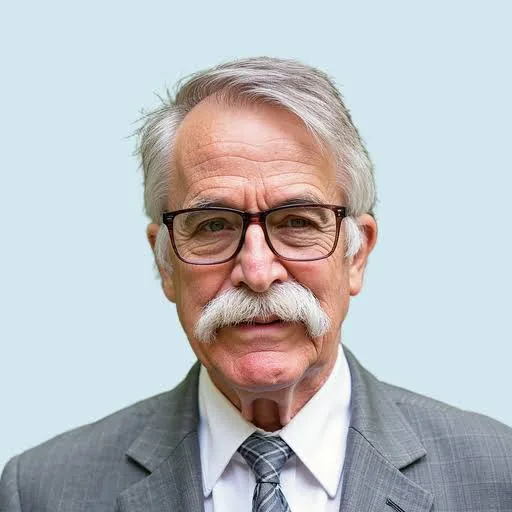
Medically reviewed
Benjamin Crocker, MD
Psychiatrist · Clinical Assistant Professor of Psychiatry, Tufts University School of Medicine · MD, The Ohio State University · Residency & fellowship training at the University of Michigan and LAC+USC Medical Center
Last reviewed August 2026. Read our editorial standards & clinical review process
Accredited & Licensed
 LegitScript Certified
 Joint Commission Accredited
 Maine DHHS Licensed
 Psychology Today Verified
When the script becomes the problem
Prescription dependence hides well , the signs
Prescription drug addiction is the easiest to rationalize, it came from a doctor, after all. But the line between taking medication and needing it gets crossed quietly, and the people crossing it are often the last to know.
- Running out early, every month, and planning your month around the refill date.
- Taking pills for the feeling, calm, energy, escape, not the condition.
- Supplementing your prescription from friends, family cabinets, or online sources.
- Withdrawal between doses: sick, anxious, sleepless, or in rebound pain.
- Hiding your use from your doctor, pharmacist, or family.
- A growing fear of what happens if the prescription stops.
One pill can kill: pills bought anywhere outside a pharmacy, even from people you know, may be counterfeit and contain fentanyl. If any pill you take didn't come from your own prescription, carry naloxone.

Starting treatment in Portland?
We'll check your benefits free in minutes, MaineCare and most major plans accepted.
Our program
Three levels of care, one clinical team
Partial hospitalization
Five days a week of structure and medical oversight after detox or when use has become daily and unmanageable, with a path home every night.
Learn about PHPIntensive outpatient
Three hours a day in day or evening tracks, where most people stabilize on medication or a taper while life keeps moving.
Learn about IOPOutpatient
Weekly therapy and ongoing medication management for the long rebuild, pain, anxiety, sleep, and focus treated the right way this time.
Learn about OPHow we treat prescription drug addiction
MAT for painkiller dependence
We coordinate with trusted local prescribers for medications that reduce opioid withdrawal and cravings while you do therapy here, stopping the cycle from oxycodone, hydrocodone, and other opioids.
Safe benzo taper support
Gradual, physician-guided taper plans for Xanax, Klonopin, Ativan, and Valium, never abrupt, never alone, with therapy for the anxiety underneath.
Treating the original condition
Chronic pain, anxiety, insomnia, and ADHD don't disappear when the pills do. Our dual diagnosis team treats them with approaches that don't create the next dependence.
Prescriber coordination
With your consent, we work with your doctors so everyone's plan points the same direction, no mixed messages, no gaps to fall through.
Group therapy
The shame of 'it was prescribed' addiction is heavy. Sitting with people who took the same path from medicine to dependence lifts it.
Family therapy
Families often enabled the pills out of love, or policed them out of fear. We help yours become part of the solution.
Our Spaces
Beautiful spaces built for comfort, community, and healing
Where you recover matters. Every room at Portland Treatment was designed to feel calm, open, and human, so you can focus on the work of getting well.
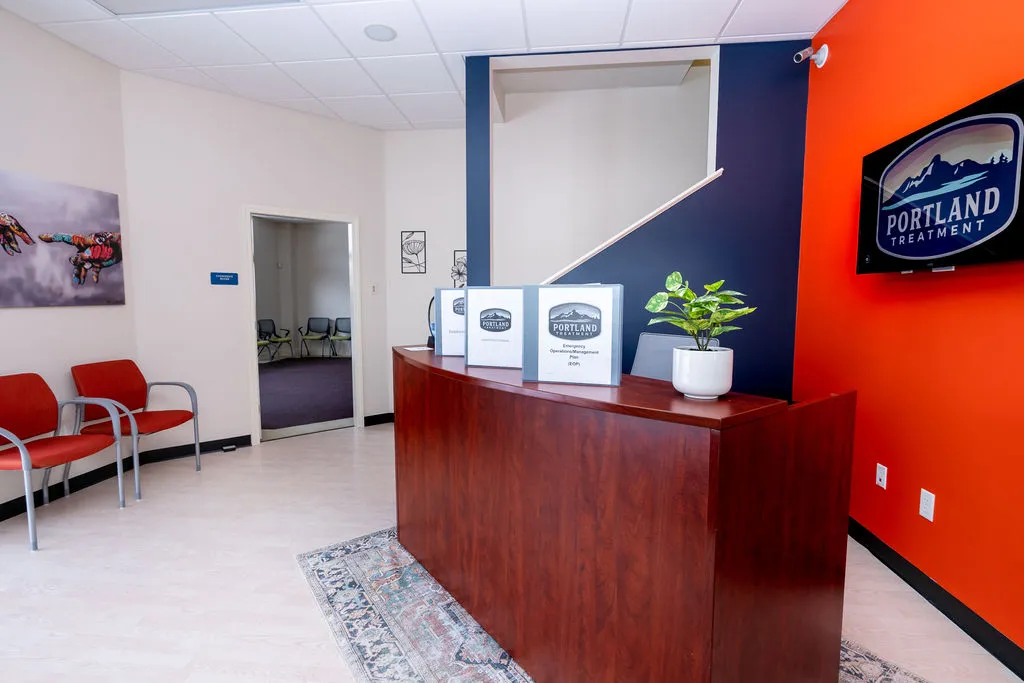
A Welcoming Front Door
The first room you walk into sets the tone. Warm light, real people, and a team that knows your name before you sit down.
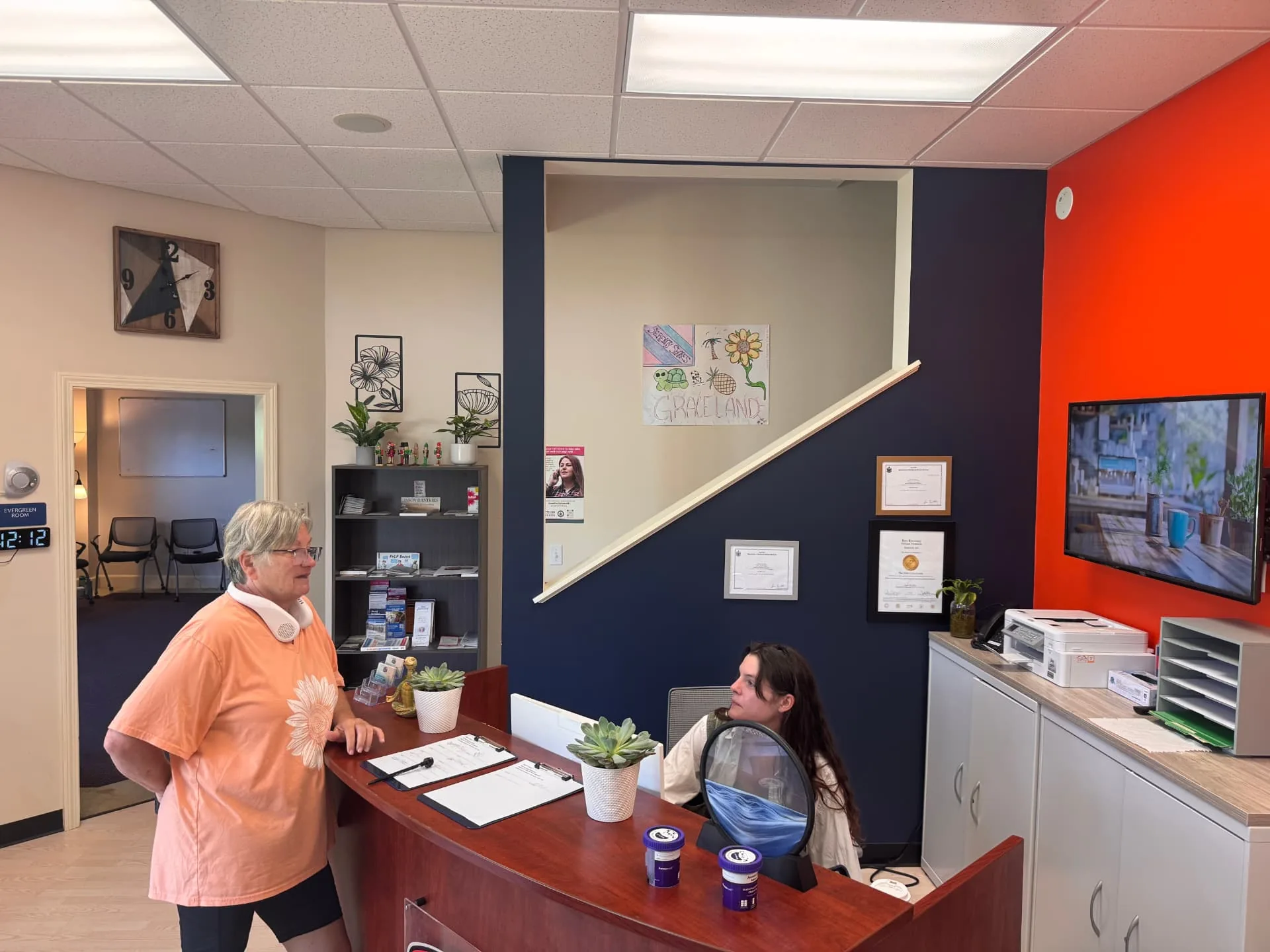
Real People at the Front Desk
A friendly face, a calm lobby, and a team ready to help you take the first step without judgment.
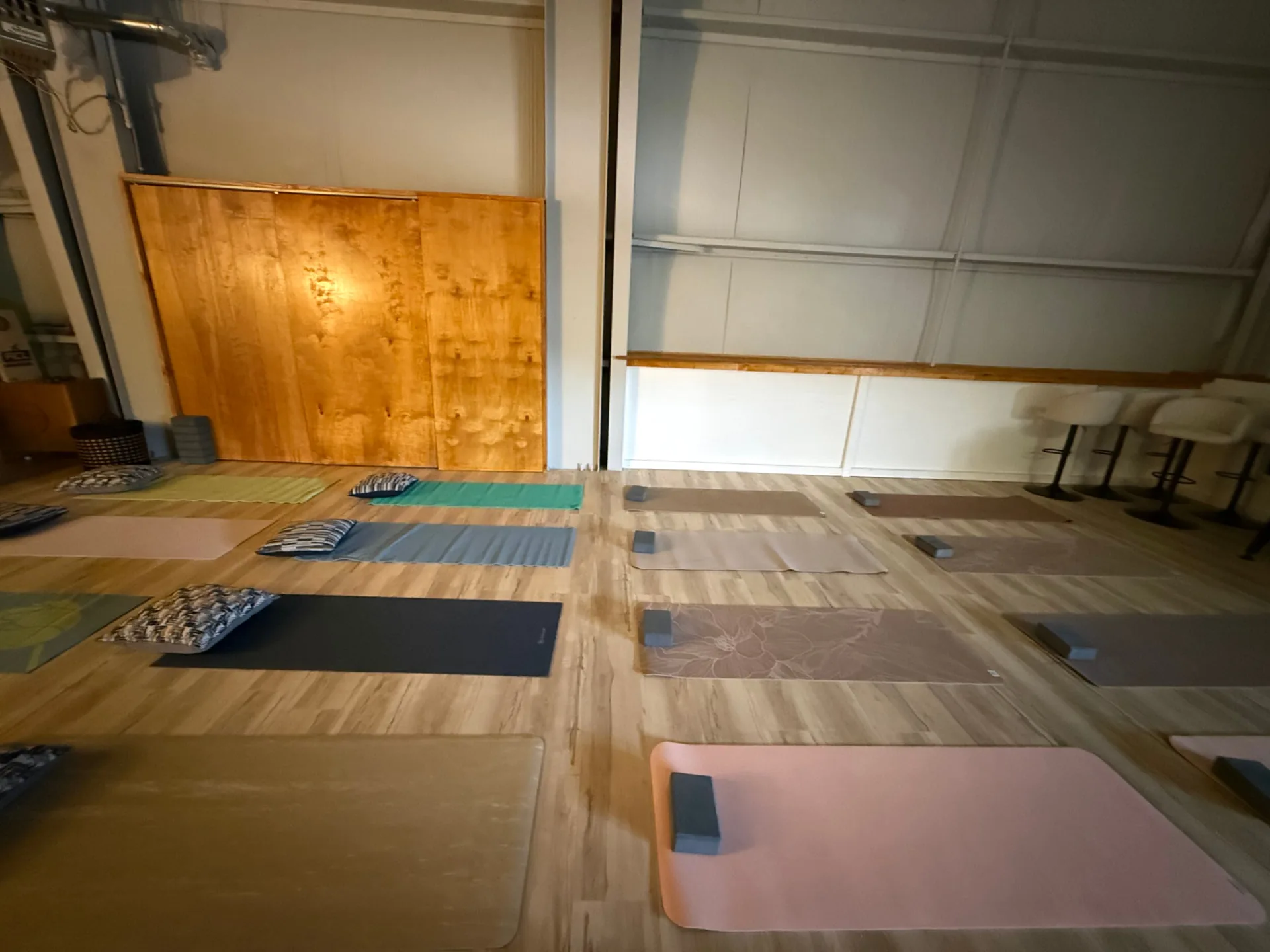
Space to Reconnect
Our yoga therapy space is prepared with mats, bolsters, blocks, and room to practice mindful movement at your own pace.
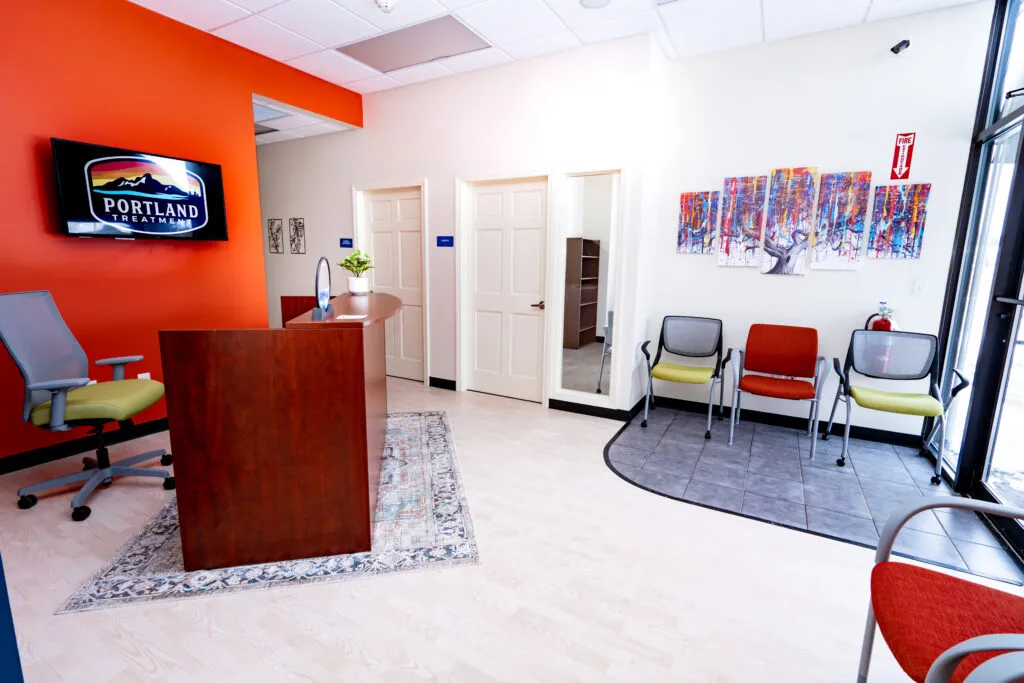
Room to Breathe
Open, bright waiting areas designed to feel like a place you'd actually want to spend time, not a clinic hallway.
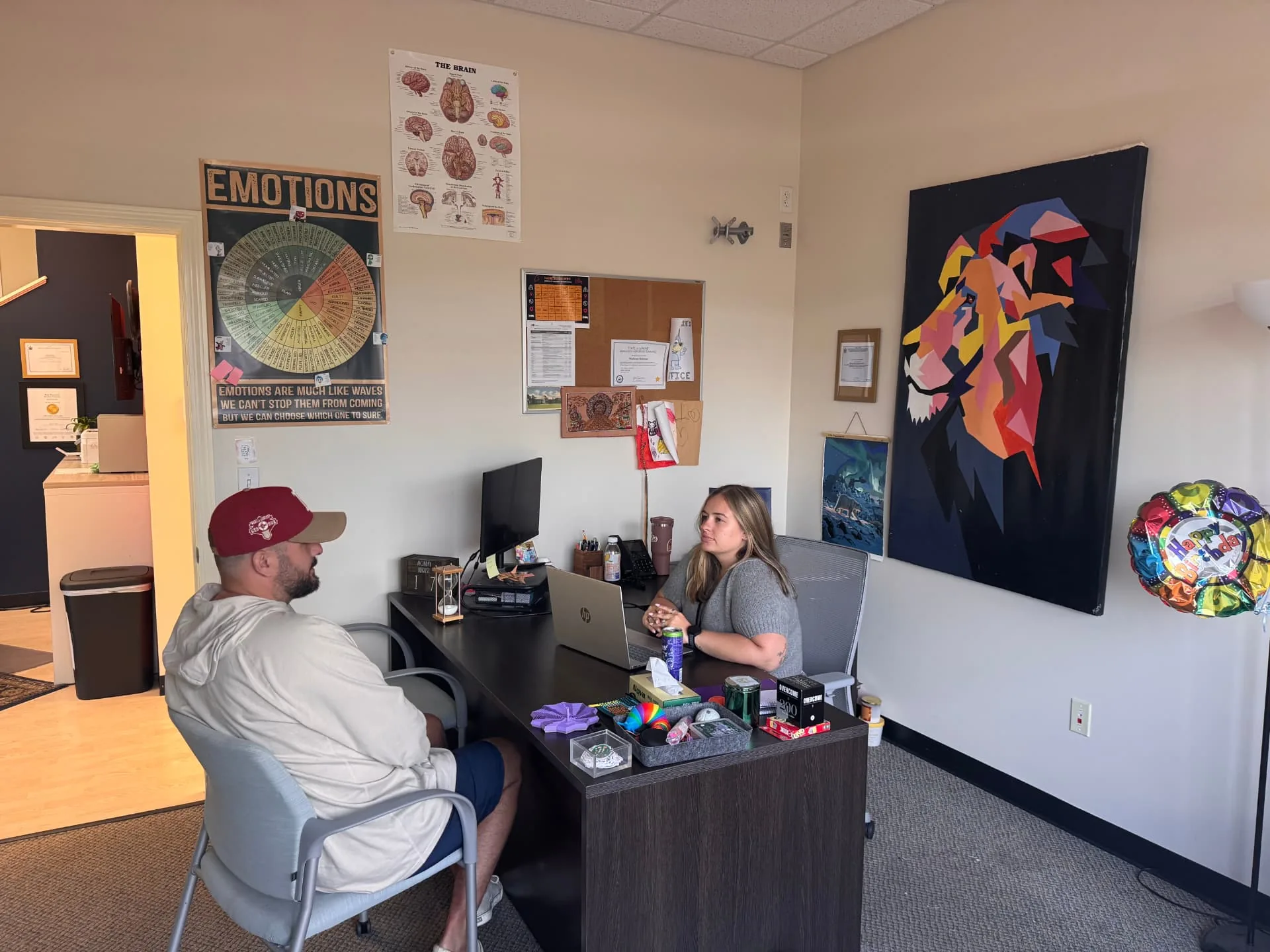
One-on-One Support
Private offices where honest conversations happen between clients and clinicians, safe, confidential, and focused on you.
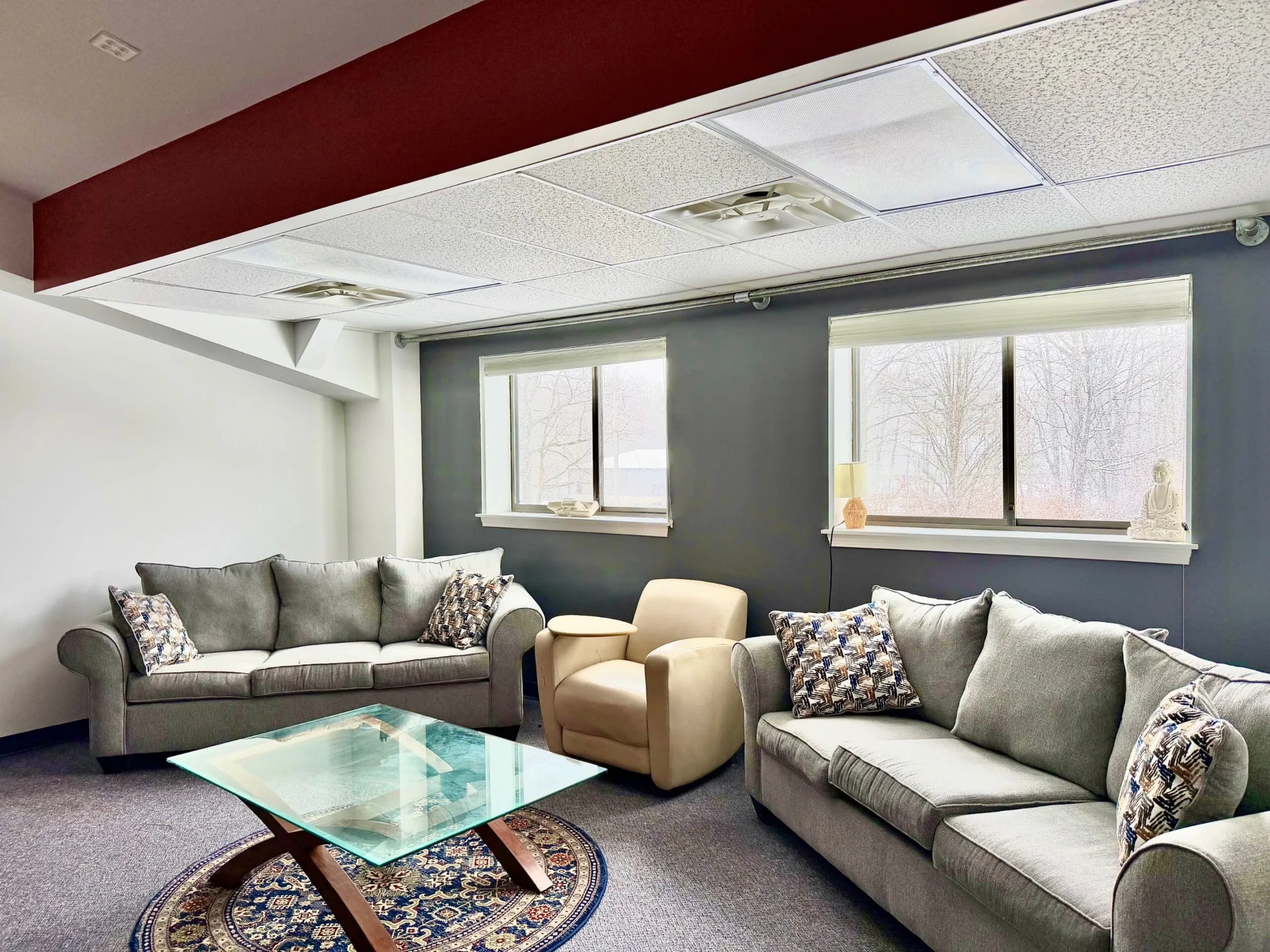
Spaces Made for Connection
Comfortable group lounges where honest conversation happens and community starts to take hold.
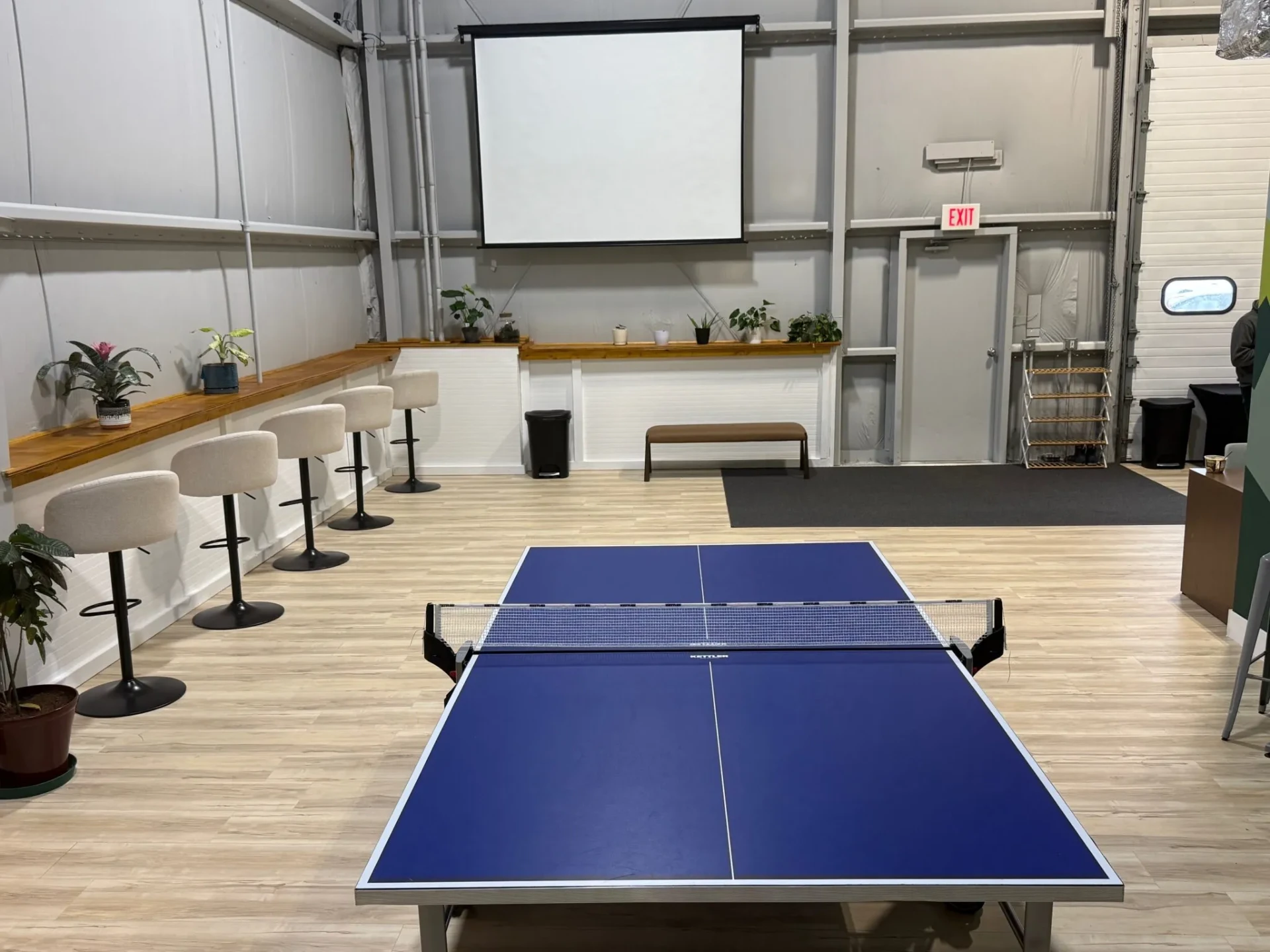
Recovery Beyond the Session
Our community room hosts everything from movie nights to ping-pong tournaments, because healing needs joy, too.

Prescription drug treatment near you
No judgment here. Half of Maine knows this story.
Mill's injury. Back surgery. The anxiety that came with the layoffs. Southern Maine knows exactly how a legitimate prescription becomes a dependence, and the shame around it keeps people suffering years longer than they need to. Our program exists to end that, quietly and effectively.
We're in Biddeford, five minutes from Saco, twenty from downtown Portland, and an easy drive from Old Orchard Beach, Scarborough, South Portland, Westbrook, Kennebunk, and Sanford. Everything is confidential under federal 42 CFR Part 2 protections, your employer and your doctors hear nothing without your written consent.
Insurance
In-network with almost every plan.
Portland Treatment is in-network with Anthem, UMR/UnitedHealthcare, Aetna, Harvard Pilgrim, Martin's Point, TRICARE and MaineCare, Cigna is our only out-of-network plan. In-network means contracted rates, lower coinsurance and no balance bill. We verify your benefits free, in minutes, with no obligation.







Free, confidential, no obligation
Or read the coverage guide for your plan, Anthem rehab coverage, Cigna rehab coverage, MaineCare rehab coverage and other accepted insurance plans.
Prescription drug treatment questions
- Can you be addicted to something your doctor prescribed?
- Yes, and it's one of the most common paths into addiction. Physical dependence on opioids, benzodiazepines, and stimulants can develop with perfectly compliant use. It becomes a use disorder when doses escalate, use continues despite harm, or stopping feels impossible. None of that is a moral failing; it's a known pharmacological risk.
- Will you tell my doctor I'm in treatment?
- Only with your written consent, and often that's a good idea, because coordinated care works better. But addiction treatment records are protected by federal 42 CFR Part 2 rules, beyond HIPAA. Nothing is shared with any prescriber, employer, or family member unless you authorize it.
- What if I still need pain or anxiety treatment?
- Then you get it, done safely. Recovery doesn't mean white-knuckling chronic pain or panic attacks untreated. Our medical team manages non-opioid pain strategies, non-benzo anxiety treatments, and non-stimulant ADHD options, alongside therapy that reduces how much medication you need at all.
- I buy pills but only from people I know. Is that really dangerous?
- Yes. The DEA has seized massive quantities of counterfeit pills containing fentanyl that are visually identical to real Percocet, Xanax, and Adderall, and they move through normal social networks, not just street dealers. If a pill didn't come from your own pharmacy bottle, you can't know what's in it.
- Do I need detox first?
- It depends on what you're taking. Opioid dependence often transitions straight onto buprenorphine in outpatient care. Benzodiazepines need a gradual taper, sometimes starting in a medical detox. Alcohol plus pills raises the stakes. A short confidential assessment answers this safely, call us before stopping anything.
- Does MaineCare cover prescription drug addiction treatment?
- Yes, in most cases. MaineCare and nearly all commercial plans cover MAT, PHP, IOP, and outpatient therapy. We verify your benefits for free, in minutes, with no obligation.
Sources & references
- 1. SAMHSA, National Survey on Drug Use and Health (2023)
- 2. National Institute on Drug Abuse (NIDA)
- 3. National Institute on Drug Abuse (NIDA)
- 4. U.S. Drug Enforcement Administration (DEA)
- 5. NIDA, Principles of Drug Addiction Treatment: A Research-Based Guide
This page is educational and is not medical advice. Research findings describe group averages; individual results vary. Never stop opioids, benzodiazepines, or other medications abruptly without medical guidance. Pills obtained outside a pharmacy may contain fentanyl, carry naloxone. If you are in crisis, call or text 988, or dial 911 for an emergency.
Keep exploring
Related care at Portland Treatment
Other conditions we treat
- Alcohol rehab in Biddeford and Portland
Outpatient alcohol treatment with detox coordination.
- Opioid addiction treatment
Therapy, groups and MAT coordination for opioid use.
- Fentanyl rehab in Maine
Why fentanyl requires a different approach to opioid treatment.
- Benzodiazepine addiction treatment
Safe tapers, medical oversight and outpatient support.
Programs that treat it
- Partial hospitalization program (PHP) in Biddeford
Our most structured day treatment, five days a week, home each night.
- Intensive outpatient program (IOP) in Southern Maine
Nine-plus clinical hours a week with day and evening tracks.
- Outpatient program (OP) for ongoing recovery
One to two sessions a week that fit around work and family.
- MAT coordination with local prescribers
We partner with local Suboxone, methadone and Vivitrol prescribers.
Related reading
- Is gabapentin addictive?
Dependence, misuse and withdrawal, explained plainly.
- Is trazodone addictive?
What to know if you were prescribed it for sleep.
- Alcohol detox risks and withdrawal
Why quitting alcohol cold turkey can be dangerous.
- Does insurance cover rehab?
Coverage, costs and what to ask your plan.
Serving Southern Maine
- Addiction treatment for Portland, Maine
A 20-minute drive down I-95 from the Portland peninsula.
- Addiction treatment in Biddeford, Maine
Our home clinic, in the mill district off Route 111.
- Addiction treatment for Saco, Maine
Minutes across the river from our Biddeford clinic.
- All Southern Maine areas we serve
Every city and town within driving distance of Biddeford.
Nobody plans this. Everybody deserves a way out.
Confidential help starts here.
855-449-7674Answered 24 hours a day, 7 days a week. Free and confidential.