The Drug Enforcement Administration recently announced its intent to temporarily place certain 7-hydroxymitragynine products, commonly called 7-OH, into Schedule I of the Controlled Substances Act. This is a major federal development for a substance that has become increasingly visible in gas stations, vape shops, smoke shops, online stores, tablets, gummies, powders, liquid shots, and products …
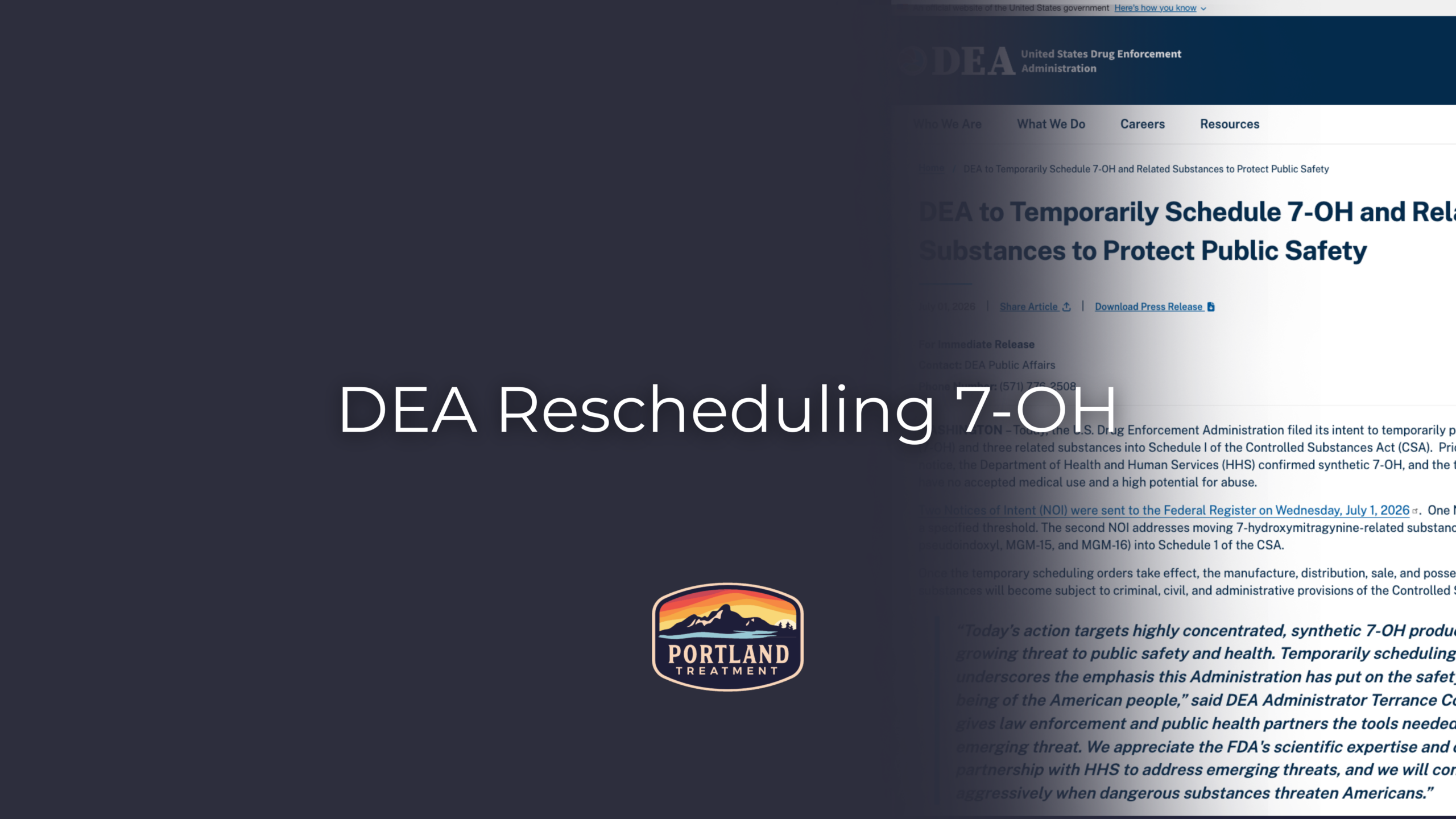

The Drug Enforcement Administration recently announced its intent to temporarily place certain 7-hydroxymitragynine products, commonly called 7-OH, into Schedule I of the Controlled Substances Act. This is a major federal development for a substance that has become increasingly visible in gas stations, vape shops, smoke shops, online stores, tablets, gummies, powders, liquid shots, and products marketed as “enhanced kratom.”
For people in Maine who have been using 7-OH, kratom extracts, or other opioid-like products to manage pain, stress, withdrawal, or cravings, this announcement can feel confusing and scary. The goal of this article is to explain what the DEA action means, why 7-OH has drawn federal attention, and when it may be time to seek professional help.
What Is 7-OH?
7-OH stands for 7-hydroxymitragynine. It is a psychoactive compound related to kratom, a plant known as Mitragyna speciosa. While 7-OH can occur naturally in kratom in trace amounts, many of the products now being sold are not the same as traditional kratom leaf or plain kratom powder.
The concern is concentrated or semi-synthetic 7-OH. These products may contain much higher levels of 7-OH than naturally occurring kratom and may act more like opioid drugs in the body. The FDA has warned that 7-OH binds to opioid receptors and has potential for abuse, dependence, and withdrawal.
What Did the DEA Announce?
On July 1, 2026, the DEA announced that it had filed notices of intent to temporarily schedule 7-OH and related substances. According to the DEA, one notice focuses on 7-OH above a specified threshold, while a second notice focuses on related substances, including mitragynine pseudoindoxyl, MGM-15, and MGM-16.
This does not mean every natural kratom leaf product is automatically treated the same way. The DEA stated that the temporary scheduling action does not apply to botanical kratom products that contain naturally occurring 7-OH below the specified threshold. Instead, the action is aimed at synthesized products and products with elevated 7-OH concentrations.
If the temporary scheduling orders take effect, covered substances would fall under Schedule I rules. That means manufacturing, distributing, selling, or possessing covered 7-OH substances could become subject to federal criminal, civil, and administrative penalties.
Quick Facts About the DEA 7-OH Scheduling Action
| Topic | What to Know |
|---|---|
| Substance | 7-hydroxymitragynine, also known as 7-OH |
| Federal action | DEA announced intent to temporarily schedule certain 7-OH products |
| Related substances | Mitragynine pseudoindoxyl, MGM-15, and MGM-16 |
| Main target | Concentrated, synthetic, or enhanced 7-OH products |
| Not the same as | Plain botanical kratom leaf below the specified 7-OH threshold |
| Why it matters | Covered products could become Schedule I controlled substances |
| Treatment concern | People using 7-OH regularly may experience cravings, dependence, or withdrawal |
Why Is 7-OH Being Treated Differently Than Plain Kratom?
A lot of confusion comes from the fact that 7-OH is often sold under the umbrella of “kratom.” However, federal agencies are drawing a distinction between natural kratom leaf and concentrated 7-OH products.
The FDA previously stated that it was targeting concentrated 7-OH products, not natural kratom leaf products. The agency also stated that 7-OH is not FDA-approved for medical use, is not lawful in dietary supplements, and cannot lawfully be added to conventional foods.
This matters because many people may buy a product thinking it is just another kratom item when it is actually a stronger opioid-like product. Some 7-OH products may be packaged as gummies, drink mixes, shots, tablets, strips, or capsules. The FDA has also warned that some products may not clearly or accurately identify their 7-OH content.
Why Are Officials Concerned About 7-OH?
The DEA and HHS have described 7-OH and certain related substances as dangerous because of their opioid-like effects, abuse potential, and unpredictable risks. HHS and FDA said the DEA action is not intended to regulate natural leaf kratom that does not contain enhanced levels of 7-OH, but rather products above a threshold and synthetic derivatives such as MGM-15 and MGM-16.
Some of the biggest concerns include:
- Dependence after repeated use
- Withdrawal symptoms when stopping
- Increased tolerance over time
- Sedation or impairment
- Unpredictable product strength
- Use alongside alcohol, benzodiazepines, opioids, or other depressants
- Packaging that makes products appear safer than they are
- People using 7-OH to self-manage opioid withdrawal without medical support
For someone who is already vulnerable to opioid use disorder, 7-OH can become a serious problem quickly. Even when a person starts using it with the intention of avoiding illicit opioids, managing pain, or getting through withdrawal, the product itself may create a new cycle of dependence.
Signs 7-OH Use May Be Becoming a Problem
Not everyone who has tried 7-OH will need treatment. However, regular use can become concerning when the person feels unable to stop or begins using it to function normally.
Possible warning signs include:
- Taking 7-OH every day or multiple times per day
- Needing more to get the same effect
- Feeling anxious, restless, sweaty, sick, or irritable when cutting back
- Using 7-OH to avoid opioid withdrawal
- Spending more money than intended
- Hiding use from family or loved ones
- Switching between kratom, 7-OH, pills, alcohol, or other substances
- Feeling stuck between “legal” products and illicit drugs
- Trying to quit but repeatedly going back
These signs do not mean someone has failed. They mean the body and brain may have adapted to a substance with opioid-like effects. That is exactly when support can make a difference.
Can 7-OH Cause Withdrawal?
Many people report withdrawal-like symptoms after regular 7-OH or high-potency kratom extract use. Symptoms may vary depending on the product, dose, frequency of use, length of use, and whether other substances are involved.
Possible symptoms may include:
- Sweating
- Chills
- Restlessness
- Anxiety
- Insomnia
- Muscle aches
- Stomach upset
- Diarrhea
- Fatigue
- Irritability
- Cravings
- Runny nose or watery eyes
- Depressed mood
Because 7-OH products can vary so much in strength and labeling, it can be hard for someone to know exactly what they have been taking. That uncertainty is one reason medically supervised detox or outpatient treatment may be safer than trying to stop alone.
What Does Schedule I Mean?
Schedule I is the most restrictive category under the federal Controlled Substances Act. Substances in Schedule I are considered to have a high potential for abuse, no currently accepted medical use in treatment in the United States, and a lack of accepted safety for use under medical supervision.
The DEA’s announcement is currently about temporary scheduling. HHS noted that, after the comment process and required timeline, the Attorney General may issue a temporary scheduling order for 7-OH above a certain threshold if the legal requirements are met. Temporary Schedule I placement can last for two years and may be extended under federal law.
For people using 7-OH, the practical takeaway is this: access may change quickly, and relying on unregulated products may become more dangerous, less predictable, and legally risky.
Why Sudden Bans Can Increase Risk for Some Users
When a substance becomes harder to find, people who are dependent on it may panic. Some may try to stockpile products. Others may switch to stronger or more dangerous substances. Some may return to illicit opioids if they were using 7-OH or kratom products to avoid withdrawal.
That is why treatment conversations need to be careful. A scheduling action may reduce access to risky products, but people who are already dependent still need real help. Fear alone does not treat withdrawal, cravings, trauma, pain, or opioid use disorder.
At Portland Treatment, we believe people deserve support without shame. Whether someone has been using 7-OH, kratom extracts, prescription opioids, fentanyl, heroin, or multiple substances, the safest next step is often a professional assessment.
Treatment Options for 7-OH, Kratom, and Opioid-Like Dependence
Treatment should be based on the person’s symptoms, history, medical needs, mental health, and substance use pattern. For some people, outpatient support may be enough. Others may need detox before stepping down into ongoing care.
Helpful options may include:
- Medical assessment
- Detox when needed
- Medication-assisted treatment when appropriate
- Outpatient programming
- Group therapy
- Individual therapy
- Relapse prevention planning
- Mental health support
- Family education
- Aftercare planning
Medication-assisted treatment, or MAT, can be especially important when someone is using 7-OH to avoid opioid withdrawal or when they are at risk of returning to illicit opioids. MAT provides a supervised, clinically monitored alternative instead of relying on unknown packaging, unregulated strengths, or street drugs.
How Portland Treatment Can Help
Portland Treatment provides structured addiction treatment support for people in Maine who need help with substance use, cravings, withdrawal risk, and relapse prevention. Our team works with people who may feel embarrassed, afraid, or unsure whether their substance use “counts” as addiction.
You do not have to wait until everything falls apart. If 7-OH or kratom extracts have become part of your daily routine, if you feel withdrawal when you stop, or if you are worried about what happens after federal scheduling changes, now is the time to reach out.
We can help you understand your options, build a safer plan, and connect you with the level of care that fits your needs.
Frequently Asked Questions About 7-OH and DEA Scheduling
Is 7-OH federally illegal now?
The DEA announced its intent to temporarily schedule certain 7-OH products and related substances on July 1, 2026. The action focuses on 7-OH above a specified threshold and synthetic related substances. Once temporary scheduling orders take effect, covered substances would be subject to federal controlled substance rules.
Is kratom federally illegal?
The DEA announcement states that the temporary scheduling action does not apply to botanical kratom products that contain naturally occurring 7-OH below the specified threshold. The federal action is aimed at synthesized products and elevated concentrations of 7-OH.
Is 7-OH the same as kratom?
No. 7-OH can occur naturally in kratom in trace amounts, but many 7-OH products are concentrated, enhanced, or semi-synthetic. These products may be much stronger and riskier than traditional kratom leaf.
What are MGM-15 and MGM-16?
MGM-15 and MGM-16 are synthetic 7-OH-related substances named in the DEA and HHS announcements. HHS described MGM-15 as dihydro-7-hydroxymitragynine and MGM-16 as the 9-fluoro derivative of 7-hydroxymitragynine.
Can 7-OH withdrawal be treated?
Yes. People struggling with 7-OH or kratom extract withdrawal may benefit from medical guidance, detox support, outpatient treatment, therapy, and medication-assisted treatment when clinically appropriate. The best plan depends on the person’s symptoms and substance use history.
Should I stop 7-OH cold turkey?
It is safest to speak with a medical or addiction treatment professional before stopping, especially if you use 7-OH daily, use high doses, combine it with other substances, or have a history of opioid use disorder. Withdrawal can be uncomfortable and may increase the risk of returning to other substances.
Sources
Drug Enforcement Administration. (2026, July 1). DEA to temporarily schedule 7-OH and related substances to protect public safety. https://www.dea.gov/press-releases/2026/07/01/dea-temporarily-schedule-7-oh-and-related-substances-protect-public
U.S. Department of Health and Human Services. (2026, July 1). HHS, FDA commend DEA action against dangerous enhanced 7-OH products. https://www.hhs.gov/press-room/hhs-fda-support-dea-7-oh-scheduling.html
U.S. Food and Drug Administration. (2025, July 29). FDA takes steps to restrict 7-OH opioid products threatening American consumers. https://www.fda.gov/news-events/press-announcements/fda-takes-steps-restrict-7-oh-opioid-products-threatening-american-consumers
Mallon, E. (2025, July 29). FDA seeks to classify 7-OH as Schedule 1 drug amid addiction concerns. WGME. https://wgme.com/news/nation-world/fda-classify-7-oh-as-schedule-1-drug-amid-addiction-concerns-kratom-trump-marty-makary-rfk-jr-regulator
Stoico, N. (2026, March 12). Boston City Council moves toward potential kratom ban. Boston.com. https://www.boston.com/news/local-news/2026/03/12/boston-city-council-moves-toward-potential-kratom-ban/
Moon, J. (2026, May 6). NH lawmakers look to regulate potency of kratom. New Hampshire Public Radio. https://www.nhpr.org/nh-news/2026-05-06/kratom-nh-lawmakers-look-to-regulate-kratom-potency
It’s easy and free!

John Ingham
John Ingham is a respected leader and medical content writer specializing in behavioral health, addiction treatment, and other mental health. With more than a decade of experience in the recovery and treatment field, his work has been featured across leading treatment networks and educational platforms, and has contributed as a lecturer in graduate level seminars within the Steve Hicks School of Social Work at University of Texas at Austin, and undergraduate seminars at Vanderbilt University. John's work has also been recognized in public service announcements, documentaries and more, including a feature that won an Emmy Award. John has collaborated with presidential appointees in the White House, clinicians, program directors, and other leaders throughout the behavioral health space, further establishing his role as a trusted voice in the field.