
Opioid Rehab · Biddeford & Portland, Maine
Opioid addiction is treatable. The proof is in this building.
Outpatient opioid addiction treatment in Biddeford, twenty minutes from Portland, medication-assisted treatment coordinated with trusted local Suboxone prescribers, therapy that addresses why the using started, and a team that treats opioid use disorder like the medical condition it is. MaineCare and most commercial plans accepted.
No waitlist · MaineCare accepted · Answered 24/7
What the research says
Medication works, and most people who need it never get it
Every figure below links to the federal or state source it comes from. Research describes averages across large groups, not a promise about any one person's outcome.
2.5 million
An estimated 2.5 million American adults had an opioid use disorder in the past year, involving heroin, fentanyl, or prescription pain relievers.
Source: SAMHSA, National Survey on Drug Use and Health (2023)~50% fewer deaths
Treatment with buprenorphine or methadone is associated with roughly half the risk of fatal overdose compared with no medication, it is the single most effective intervention in opioid care.
Source: National Institute on Drug Abuse (NIDA)Most go without
Only a minority of Americans with opioid use disorder receive medication for it in a given year, despite strong evidence and wider availability than ever.
Source: SAMHSA / NIDA treatment-gap researchFentanyl dominates Maine
Fentanyl is involved in the overwhelming majority of Maine overdose deaths, often mixed into heroin, counterfeit pills, cocaine, or meth without the buyer knowing.
Source: Maine Drug Data Hub, Maine DHHS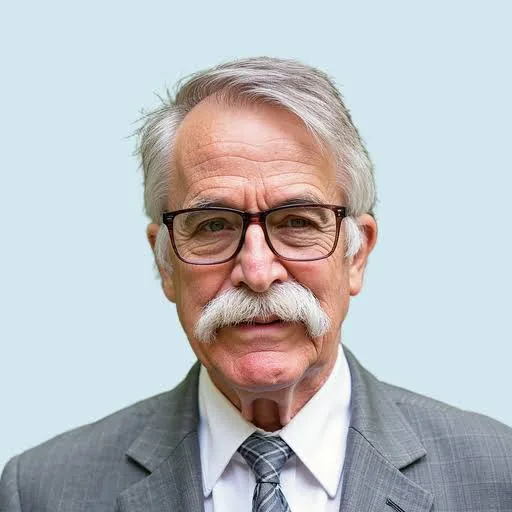
Medically reviewed
Benjamin Crocker, MD
Psychiatrist · Clinical Assistant Professor of Psychiatry, Tufts University School of Medicine · MD, The Ohio State University · Residency & fellowship training at the University of Michigan and LAC+USC Medical Center
Last reviewed August 2026. Read our editorial standards & clinical review process
Accredited & Licensed
 LegitScript Certified
 Joint Commission Accredited
 Maine DHHS Licensed
 Psychology Today Verified
When a prescription or a habit becomes a dependence
Opioid dependence hides in plain sight , the signs
Opioid use disorder doesn't look one way. It shows up in people filling legitimate prescriptions after surgery, in people buying pills on the street, and in people who switched to heroin when the pills ran out. The pattern underneath is the same.
- Taking more than prescribed, or running out early every month.
- Needing opioids to feel normal, not high, just able to face the day.
- Withdrawal between doses: sweating, cramps, restlessness, anxiety, no sleep.
- Doctor shopping, buying pills, or using someone else's prescription.
- A switch from pills to heroin or fentanyl because it's cheaper or easier to find.
- Trying to cut back or quit and ending up sick, then using just to stop the sickness.
Overdose risk is highest after a break: tolerance drops within days. If you or someone you love uses opioids, carry naloxone (Narcan), free at many Maine pharmacies, and never use alone.

Starting treatment in Portland?
We'll check your benefits free in minutes, MaineCare and most major plans accepted.
Our program
Three levels of care, one clinical team
Partial hospitalization
Five days a week of structured treatment right after detox or when things are unstable, medical oversight, daily groups, and medication management, home every night.
Learn about PHPIntensive outpatient
About three hours a day in day or evening tracks, where most people stabilize on medication and start rebuilding work, family, and routine.
Learn about IOPOutpatient
Weekly therapy for the long haul, with your MAT provider’s medication plan coordinated alongside it, because opioid recovery is measured in months and years, not a 28-day stay.
Learn about OPHow we treat opioid addiction
Medication-assisted treatment
We coordinate hand in hand with trusted local prescribers for Suboxone (buprenorphine/naloxone) while you do the therapy here, the evidence backbone of opioid recovery, not an optional extra.
Individual therapy
The using always has a reason, pain, trauma, anxiety, grief. Weekly one-on-one work addresses the driver, not just the drug.
CBT & relapse prevention
Map the people, places, pain, and paydays that trigger use, and rehearse responses before you're standing in front of them.
Group therapy
Opioid addiction breeds secrecy and shame. Sitting in a room of people from the same Maine towns who get it breaks both.
Dual diagnosis care
Depression, anxiety, PTSD, and chronic pain treated alongside the addiction, untreated, each one is a relapse plan.
Family therapy
Families carry opioid addiction too. We help yours understand the condition, set boundaries, and become part of the safety net.
Our Spaces
Beautiful spaces built for comfort, community, and healing
Where you recover matters. Every room at Portland Treatment was designed to feel calm, open, and human, so you can focus on the work of getting well.
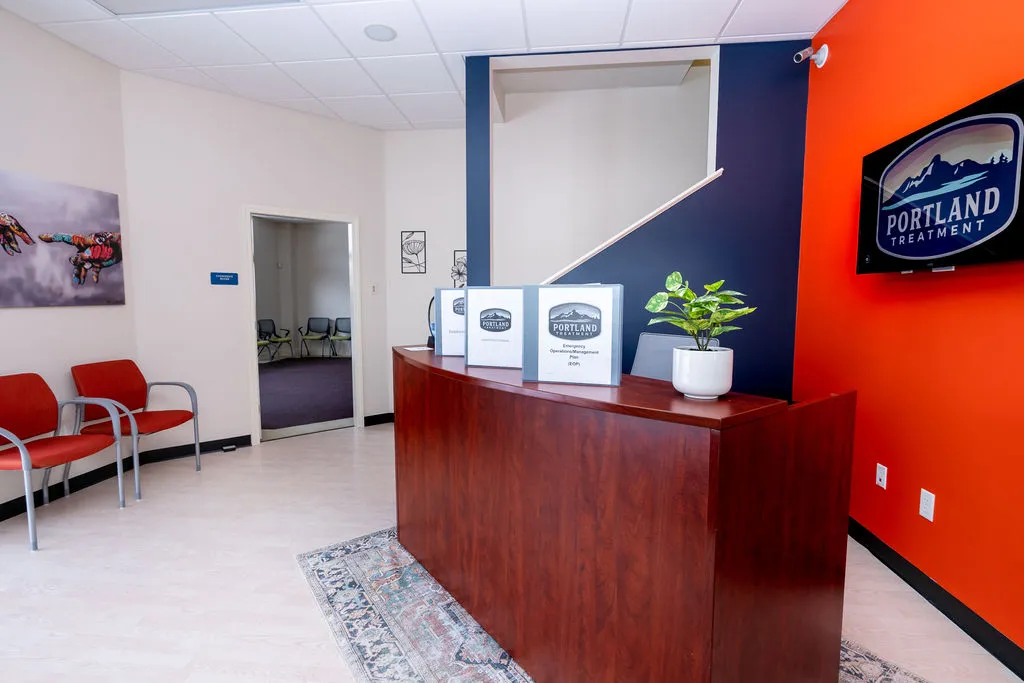
A Welcoming Front Door
The first room you walk into sets the tone. Warm light, real people, and a team that knows your name before you sit down.
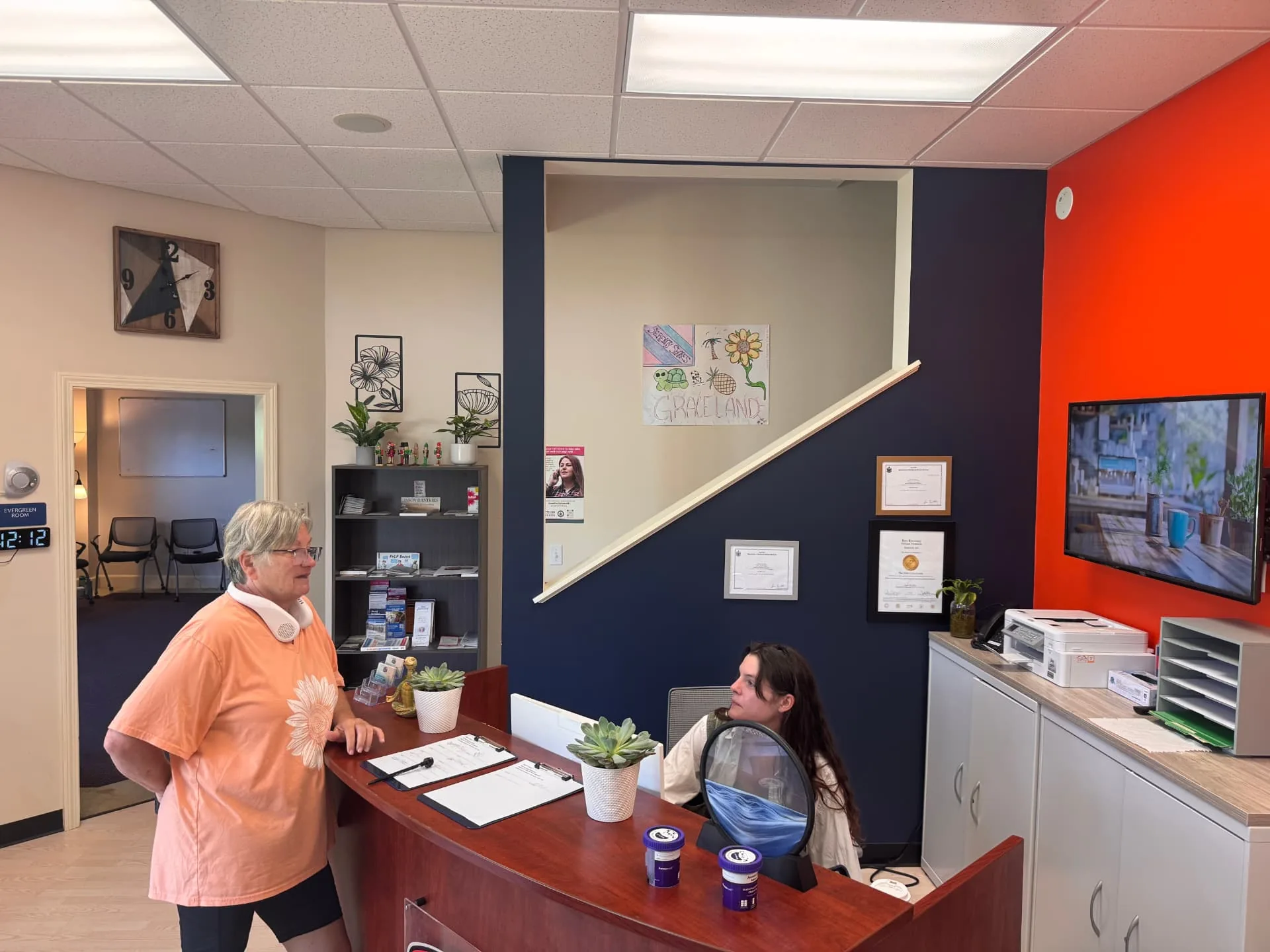
Real People at the Front Desk
A friendly face, a calm lobby, and a team ready to help you take the first step without judgment.
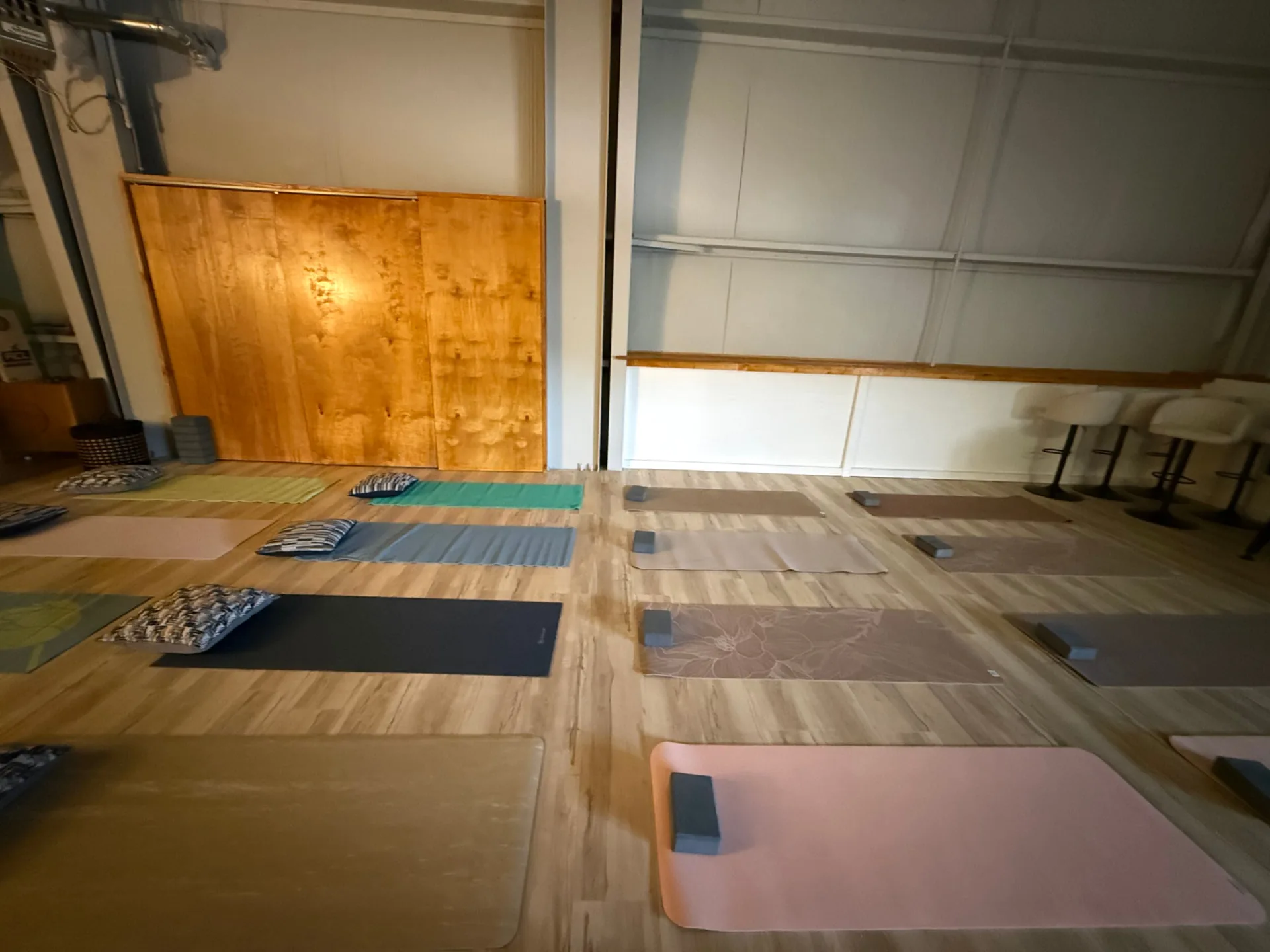
Space to Reconnect
Our yoga therapy space is prepared with mats, bolsters, blocks, and room to practice mindful movement at your own pace.
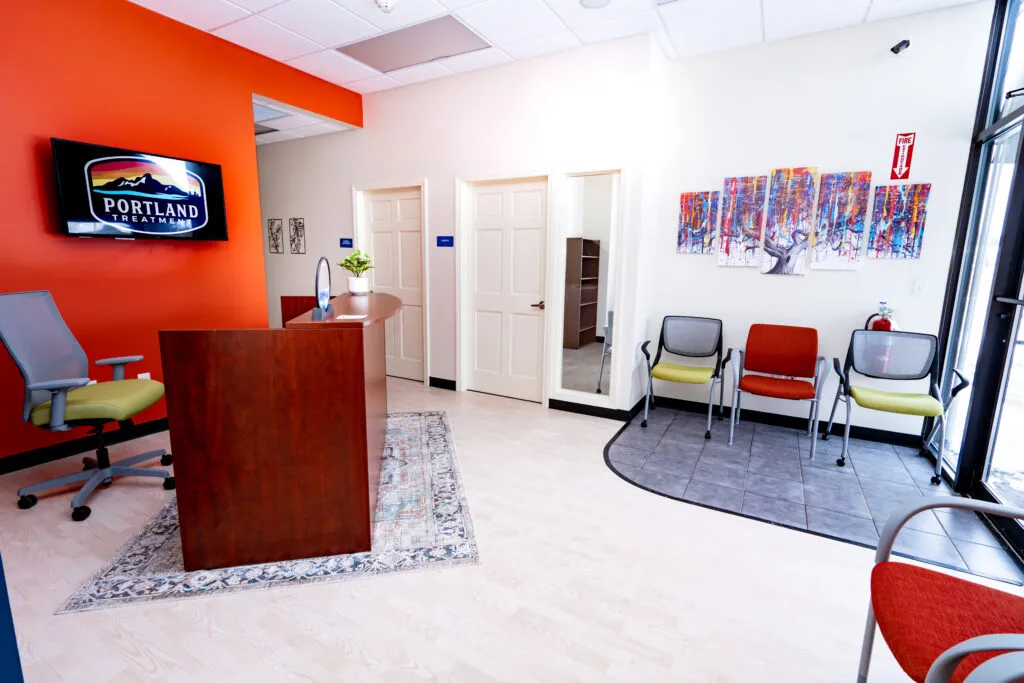
Room to Breathe
Open, bright waiting areas designed to feel like a place you'd actually want to spend time, not a clinic hallway.
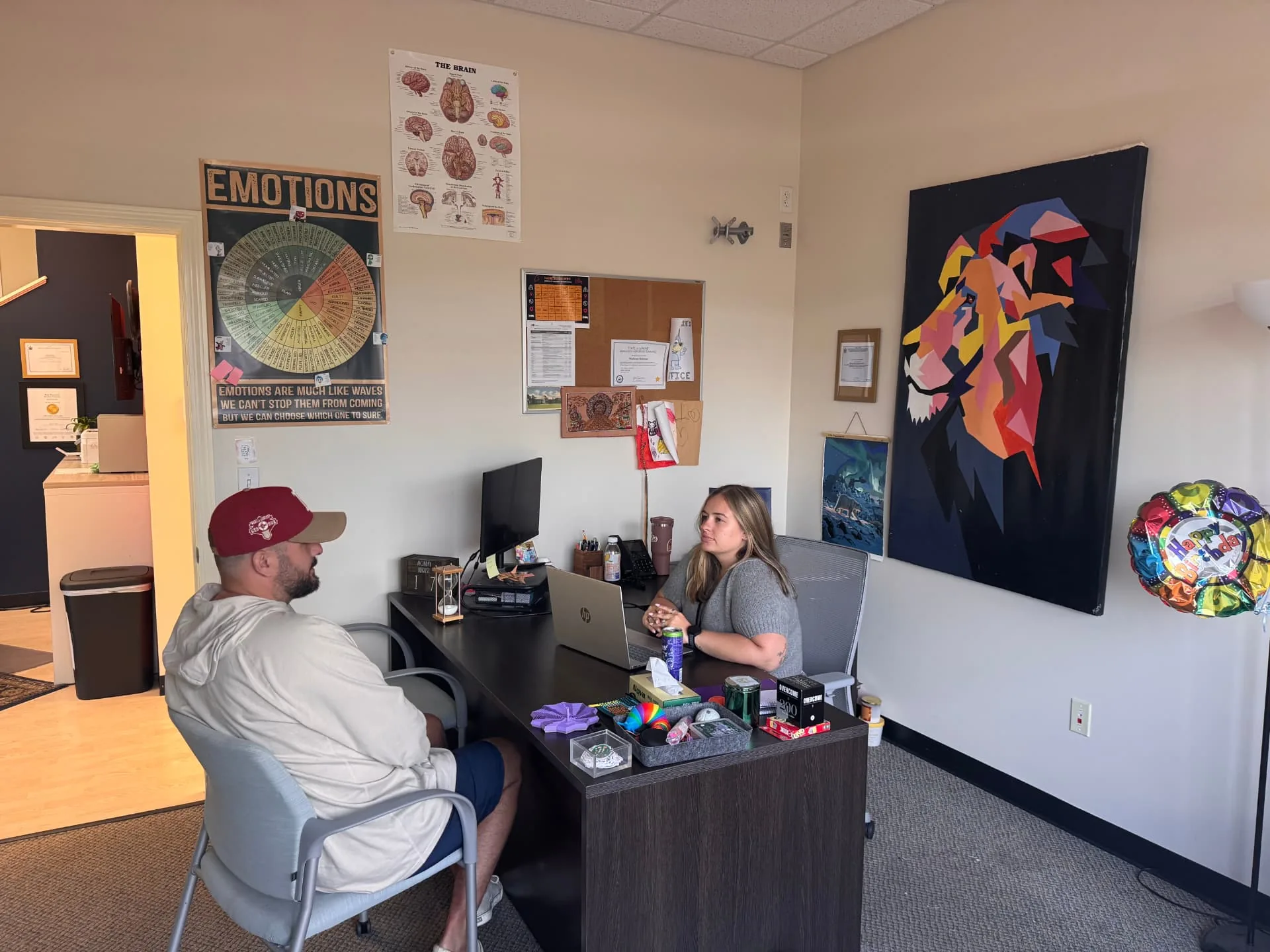
One-on-One Support
Private offices where honest conversations happen between clients and clinicians, safe, confidential, and focused on you.
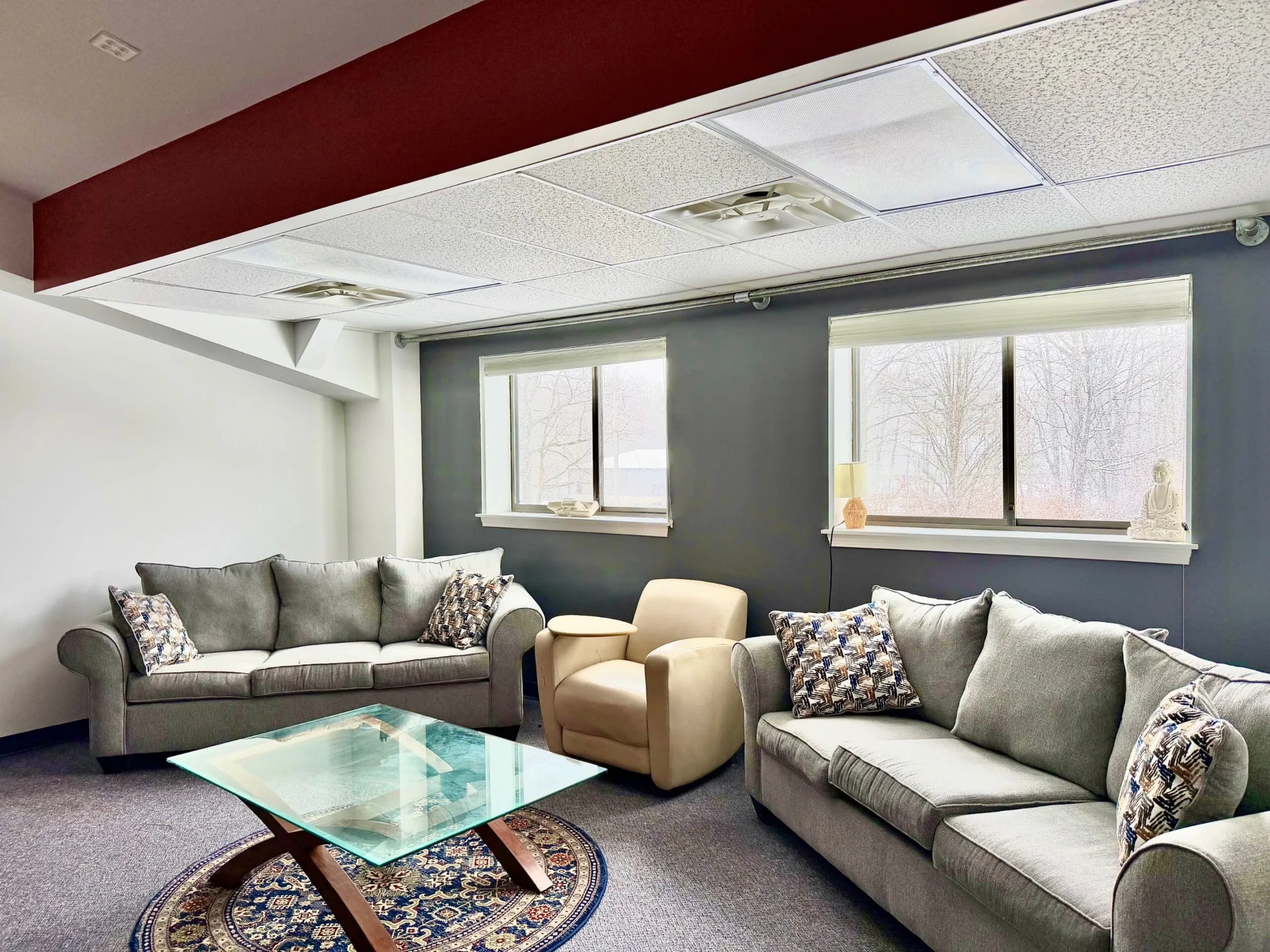
Spaces Made for Connection
Comfortable group lounges where honest conversation happens and community starts to take hold.
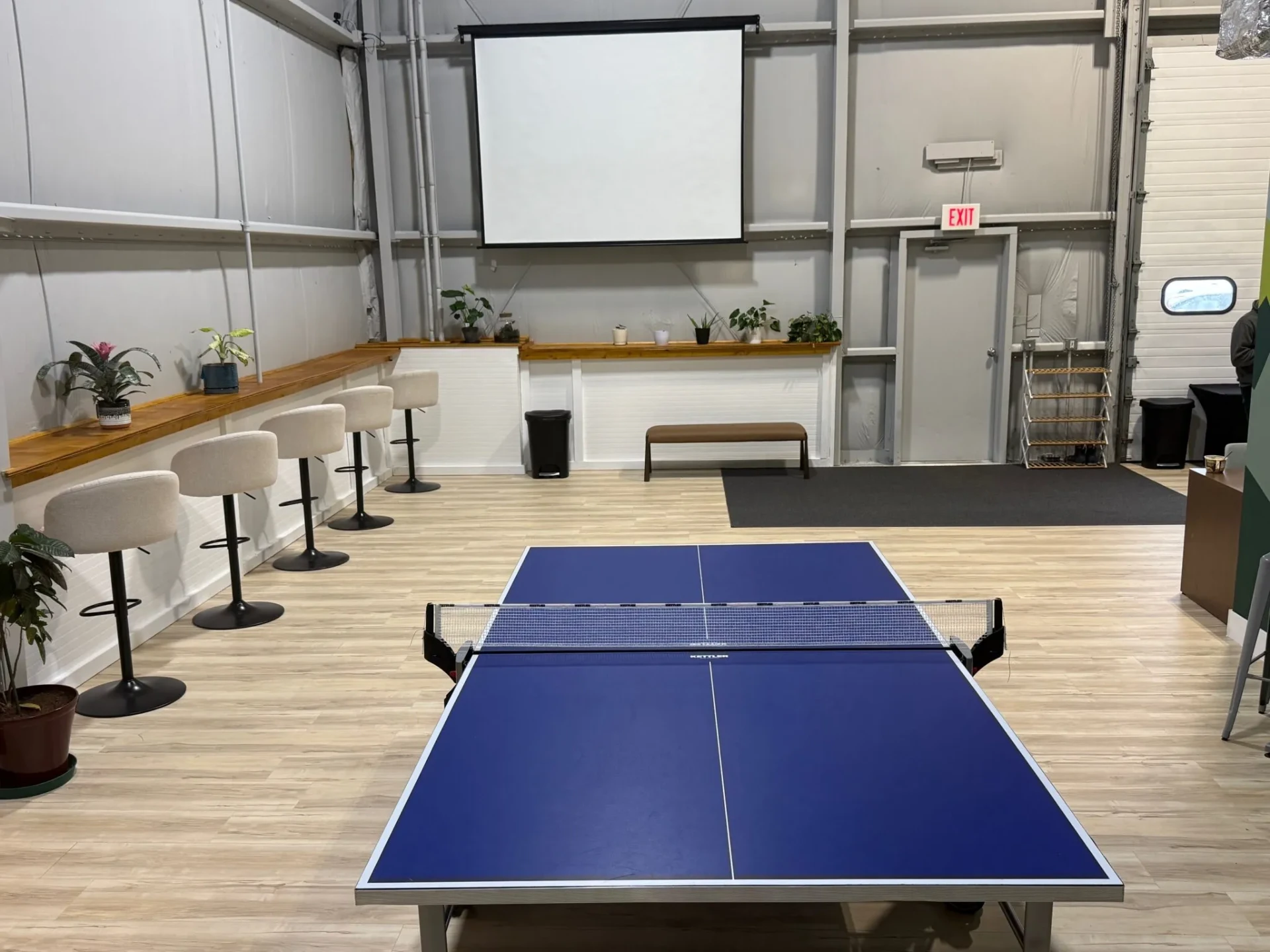
Recovery Beyond the Session
Our community room hosts everything from movie nights to ping-pong tournaments, because healing needs joy, too.

Opioid rehab near you
Recovery has to work where you live. Ours does.
Residential rehabs take you away for a month and drop you back into the exact life you were using in. Outpatient treatment in Biddeford builds recovery in that life, with medication that holds the cravings down while you relearn the rest.
We're five minutes from Saco, twenty from downtown Portland down I-95, and an easy drive from Old Orchard Beach, Scarborough, South Portland, Westbrook, Kennebunk, and Sanford. Day and evening tracks mean treatment fits around the job you can't afford to lose.
Insurance
In-network with almost every plan.
Portland Treatment is in-network with Anthem, UMR/UnitedHealthcare, Aetna, Harvard Pilgrim, Martin's Point, TRICARE and MaineCare, Cigna is our only out-of-network plan. In-network means contracted rates, lower coinsurance and no balance bill. We verify your benefits free, in minutes, with no obligation.








Free, confidential, no obligation
Or read the coverage guide for your plan, Anthem rehab coverage, Cigna rehab coverage, MaineCare rehab coverage and other accepted insurance plans.
Opioid treatment questions
- Do I need detox before starting opioid treatment?
- Not always. Many people start buprenorphine directly in outpatient care, a home or office-based induction. If you're using heavily, mixing substances, or also dependent on alcohol or benzodiazepines, we'll coordinate a medical detox with a trusted Maine provider first, then bring you straight into our program.
- Is Suboxone just trading one drug for another?
- No. Buprenorphine is a partial opioid agonist: it stops withdrawal and cravings without producing the high or the dangerous breathing suppression of full opioids. People on it drive, work, and parent normally. It cuts overdose death risk roughly in half, that's treatment, not substitution.
- I only use pills I buy from someone I know. Is that really addiction?
- The source doesn't determine the diagnosis, the pattern does. If you're using daily, hiding it, going through withdrawal between doses, or unable to stop despite wanting to, that's opioid use disorder regardless of whose name was once on the bottle. Street pills are also increasingly counterfeit and contain fentanyl.
- How long will I need to be on medication?
- There's no universal answer, research supports staying on medication as long as it's working, and many people do best with a year or more. Tapering is always an option we plan together when you're stable, never a condition we impose.
- Does MaineCare cover opioid addiction treatment?
- Yes. MaineCare covers medication-assisted treatment, PHP, IOP, outpatient therapy, and group therapy. Most commercial plans do too. We verify benefits for free, in minutes, with no obligation.
- Will my employer find out I'm in treatment?
- Not from us. Addiction treatment records carry extra federal confidentiality protection under 42 CFR Part 2, beyond standard HIPAA. Nothing goes to an employer without your written consent.
Sources & references
- 1. SAMHSA, National Survey on Drug Use and Health (2023)
- 2. National Institute on Drug Abuse (NIDA)
- 3. SAMHSA / NIDA treatment-gap research
- 4. Maine Drug Data Hub, Maine DHHS
- 5. NIDA, Principles of Drug Addiction Treatment: A Research-Based Guide
This page is educational and is not medical advice. Research findings describe group averages; individual results vary. If you use opioids, carry naloxone and never use alone, tolerance drops fast after any break, and street drugs may contain fentanyl. If you are in crisis, call or text 988, or dial 911 for an emergency.
Keep exploring
Related care at Portland Treatment
Other conditions we treat
- Alcohol rehab in Biddeford and Portland
Outpatient alcohol treatment with detox coordination.
- Fentanyl rehab in Maine
Why fentanyl requires a different approach to opioid treatment.
- Benzodiazepine addiction treatment
Safe tapers, medical oversight and outpatient support.
- Stimulant addiction treatment in Maine
Cocaine, meth and prescription stimulant care.
Programs that treat it
- Partial hospitalization program (PHP) in Biddeford
Our most structured day treatment, five days a week, home each night.
- Intensive outpatient program (IOP) in Southern Maine
Nine-plus clinical hours a week with day and evening tracks.
- Outpatient program (OP) for ongoing recovery
One to two sessions a week that fit around work and family.
- MAT coordination with local prescribers
We partner with local Suboxone, methadone and Vivitrol prescribers.
Related reading
- Is gabapentin addictive?
Dependence, misuse and withdrawal, explained plainly.
- Is trazodone addictive?
What to know if you were prescribed it for sleep.
- Alcohol detox risks and withdrawal
Why quitting alcohol cold turkey can be dangerous.
- Does insurance cover rehab?
Coverage, costs and what to ask your plan.
Serving Southern Maine
- Addiction treatment for Portland, Maine
A 20-minute drive down I-95 from the Portland peninsula.
- Addiction treatment in Biddeford, Maine
Our home clinic, in the mill district off Route 111.
- Addiction treatment for Saco, Maine
Minutes across the river from our Biddeford clinic.
- All Southern Maine areas we serve
Every city and town within driving distance of Biddeford.
Opioids don't have to write the ending.
One call changes the story.
855-449-7674Answered 24 hours a day, 7 days a week. Free and confidential.