

Cocaine Rehab · Biddeford & Portland, Maine
The crash doesn't have to be the bottom
Outpatient cocaine and crack cocaine treatment in Biddeford, twenty minutes from Portland. There's no pill for stimulant addiction, but the therapies with the strongest evidence behind them are exactly what we do: CBT, contingency-informed counseling, group work, and treatment for the anxiety, depression, and exhaustion underneath. MaineCare and most commercial plans accepted.
No waitlist · MaineCare accepted · Answered 24/7
What the research says
Cocaine addiction is psychological, and that's treatable
Every figure below links to the peer-reviewed study or federal source it comes from. Research describes averages across large groups, not a promise about any one person's outcome.
1.3 million
About 1.3 million people in the United States had a cocaine use disorder in the past year, and cocaine-involved overdose deaths have risen sharply, largely due to cocaine mixed with fentanyl.
Source: SAMHSA, National Survey on Drug Use and Health (2023)No FDA-approved medication
There is currently no FDA-approved medication for cocaine use disorder, which makes behavioral treatment, not a prescription, the core of recovery. The strongest evidence supports CBT and contingency management.
Source: National Institute on Drug Abuse (NIDA)CBT works
Meta-analyses of randomized trials show cognitive behavioral therapy produces meaningful, durable reductions in cocaine and other drug use compared with minimal treatment, especially when combined with other supports.
Source: Magill et al., Journal of Consulting and Clinical Psychology (2019)A growing threat in Maine
Cocaine is increasingly involved in Maine overdose deaths, almost always in combination with fentanyl. Stimulant users who also use opioids face the highest risk.
Source: Maine Drug Data Hub, Maine DHHS
Medically reviewed
Benjamin Crocker, MD
Psychiatrist · Clinical Assistant Professor of Psychiatry, Tufts University School of Medicine · MD, The Ohio State University · Residency & fellowship training at the University of Michigan and LAC+USC Medical Center
Last reviewed August 2026. Read our editorial standards & clinical review process
Accredited & Licensed
 LegitScript Certified
 Joint Commission Accredited
 Maine DHHS Licensed
 Psychology Today Verified
When partying becomes a pattern
Cocaine rewires motivation, willpower alone rarely undoes it
Unlike alcohol or opioids, cocaine withdrawal isn't usually medically dangerous, the danger is the crash: crushing depression, exhaustion, and cravings that pull people back within days. That cycle is exactly what treatment interrupts.
- Weekend use that quietly spread into weeknights, workdays, or using alone.
- A crash you can't function through, missing work, sleeping for days, dark moods.
- Money problems: spending you hide, debt, or savings that disappeared.
- Needing cocaine to feel normal, social, or confident, not just to party.
- Mixing with alcohol every time, or using to come down from or get up from other drugs.
- Promises to yourself, 'just weekends,' 'just this once more', that don't hold.
Fentanyl warning: cocaine in Maine is increasingly contaminated with fentanyl. If you use cocaine, carry naloxone (Narcan) and never use alone, and if you also use opioids, tell us so we can talk about medication that protects you.

Starting treatment in Portland?
We'll check your benefits free in minutes, MaineCare and most major plans accepted.
Our cocaine program
Three levels of care, one clinical team
Partial hospitalization
Five days a week of structured therapy when the cycle needs a hard break, medical oversight, daily groups, and individual work, home every night.
Learn about PHPIntensive outpatient
About three hours a day with day and evening tracks, so treatment fits around the job and family you're trying to hold onto.
Learn about IOPOutpatient
Weekly therapy that carries you through the long middle of recovery, when motivation fades and real life tests the new skills.
How we treat cocaine addiction
CBT for stimulant use
Identify the triggers, thought loops, and rituals around using, payday, certain friends, certain bars, and build concrete plans that survive contact with them.
Contingency-informed counseling
The most effective approach studied for cocaine: treatment structured around immediate, meaningful reinforcement for progress. We build its principles into your plan.
Treating what's underneath
Cocaine is often self-medication for ADHD, depression, social anxiety, or trauma. Dual diagnosis care treats both at once, or the relapse cycle restarts.
Group therapy
Stimulant addiction is isolating and shame-heavy. Groups with people from the same Maine communities break that isolation faster than anything else we offer.
Sleep, mood & energy repair
The post-cocaine brain is depleted. We help you rebuild sleep, nutrition, and natural reward, the unglamorous work that makes sobriety feel worth it.
Medication for co-occurring conditions
No pill treats cocaine itself, but treating ADHD, depression, anxiety, or alcohol use alongside it removes the reasons the cycle restarts.
Our Spaces
Beautiful spaces built for comfort, community, and healing
Where you recover matters. Every room at Portland Treatment was designed to feel calm, open, and human, so you can focus on the work of getting well.
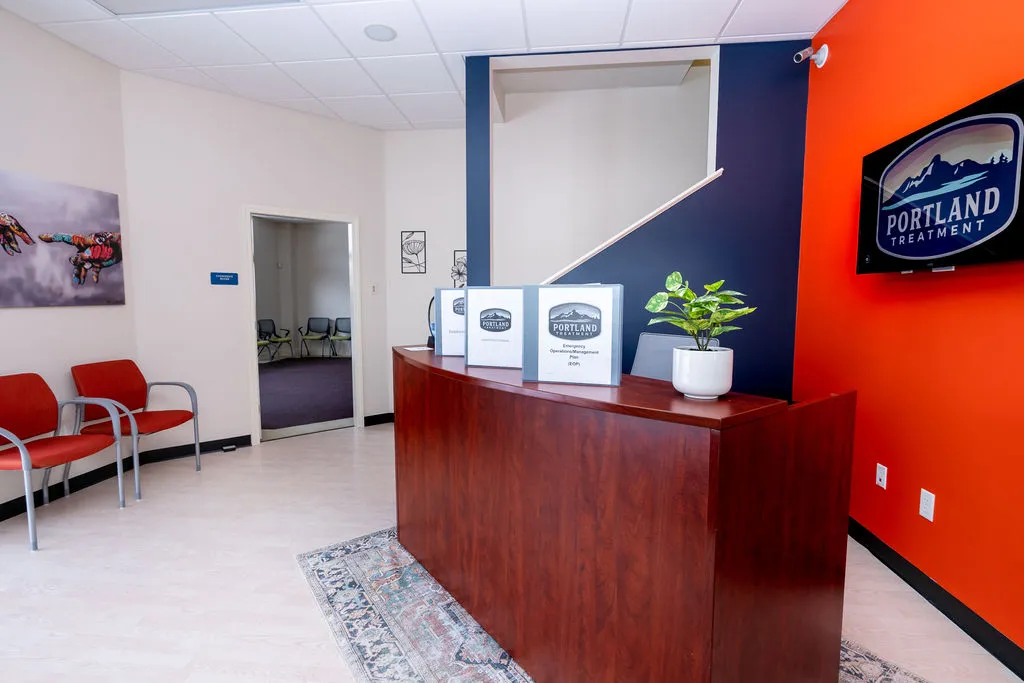
A Welcoming Front Door
The first room you walk into sets the tone. Warm light, real people, and a team that knows your name before you sit down.
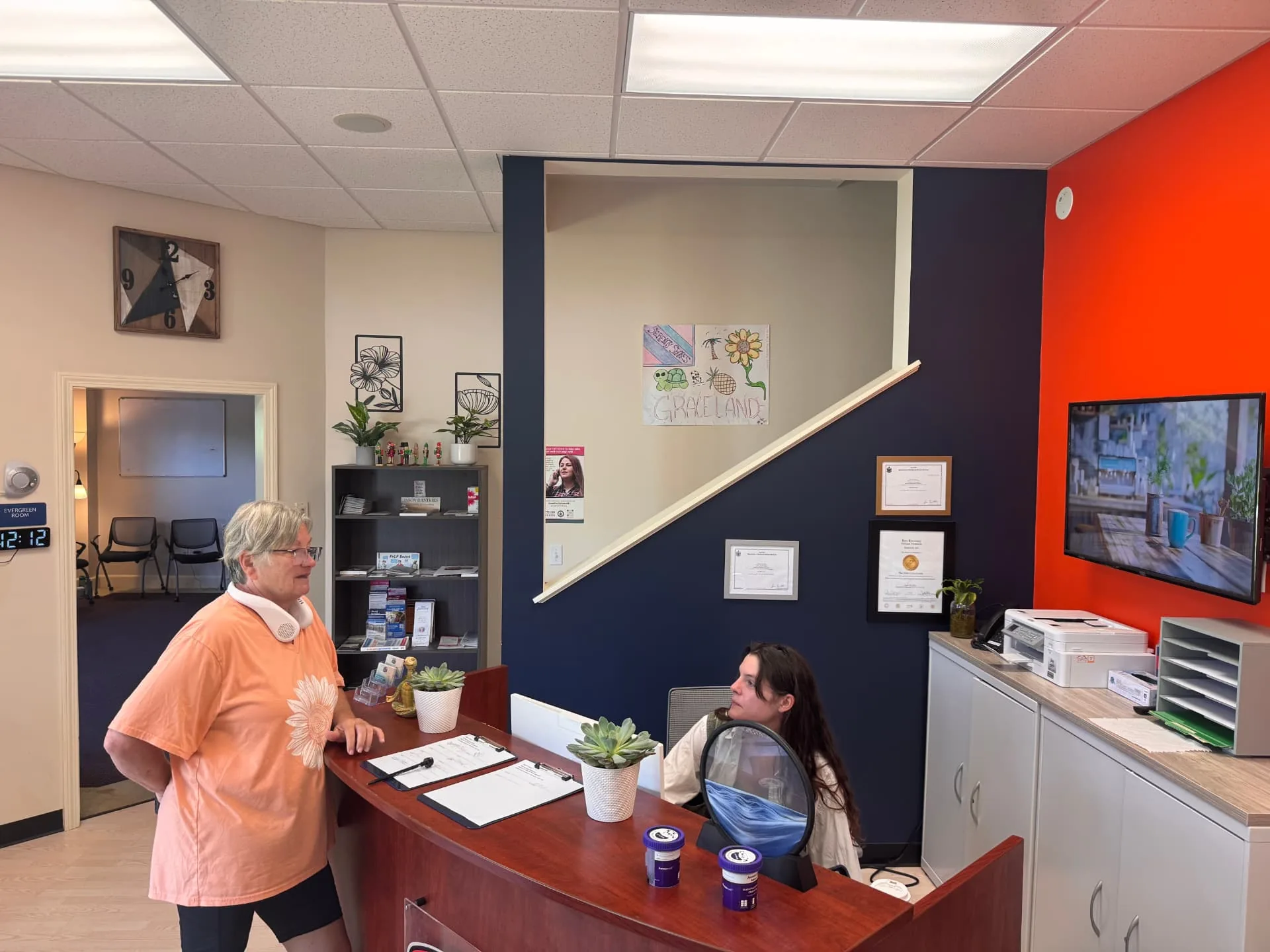
Real People at the Front Desk
A friendly face, a calm lobby, and a team ready to help you take the first step without judgment.
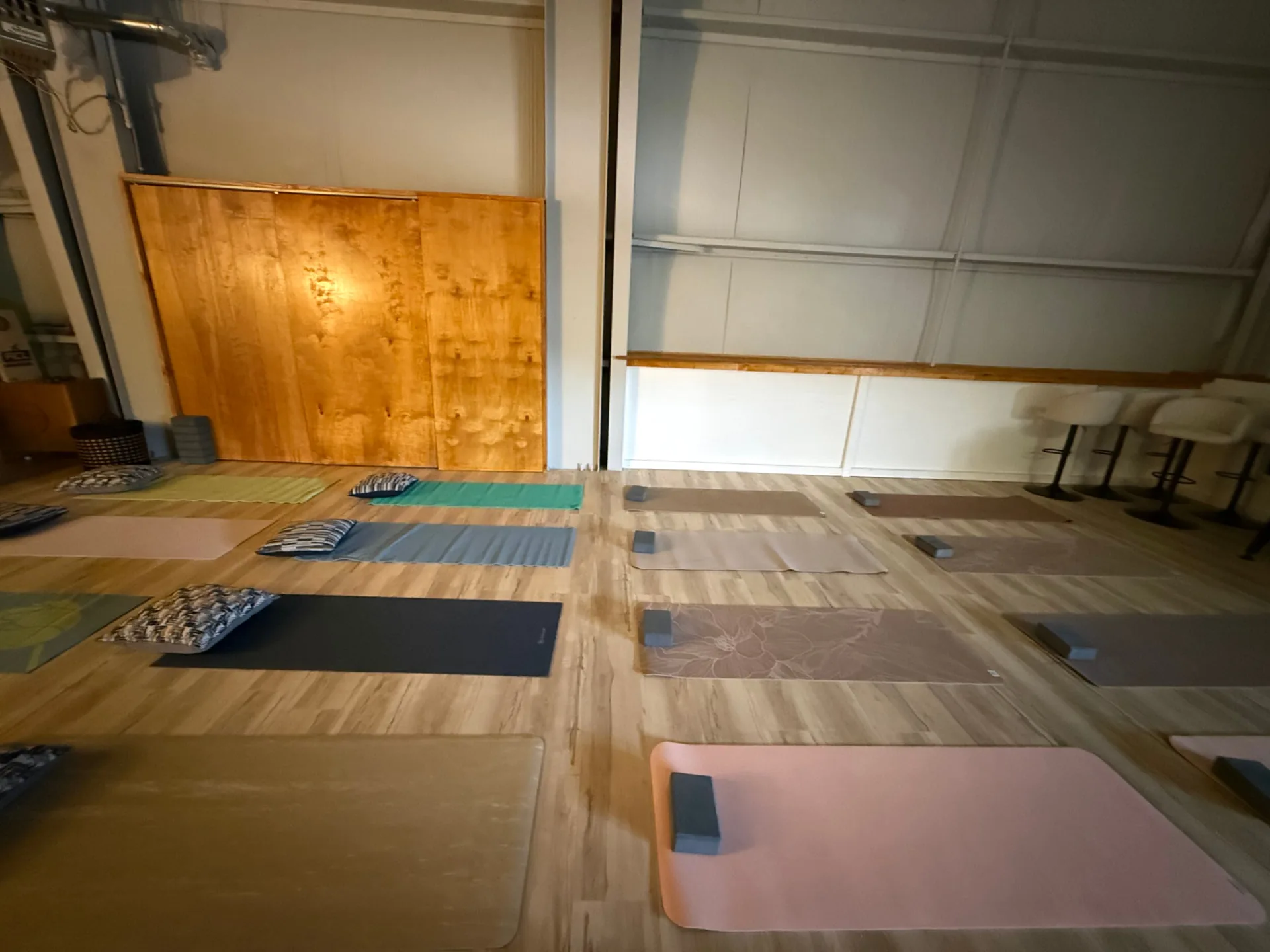
Space to Reconnect
Our yoga therapy space is prepared with mats, bolsters, blocks, and room to practice mindful movement at your own pace.
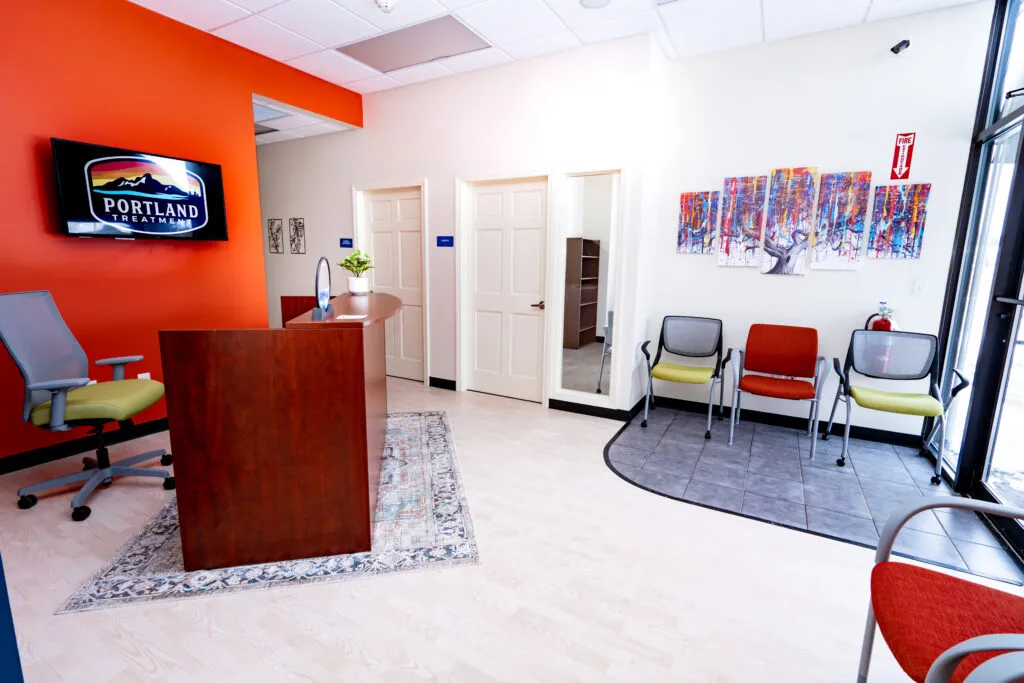
Room to Breathe
Open, bright waiting areas designed to feel like a place you'd actually want to spend time, not a clinic hallway.
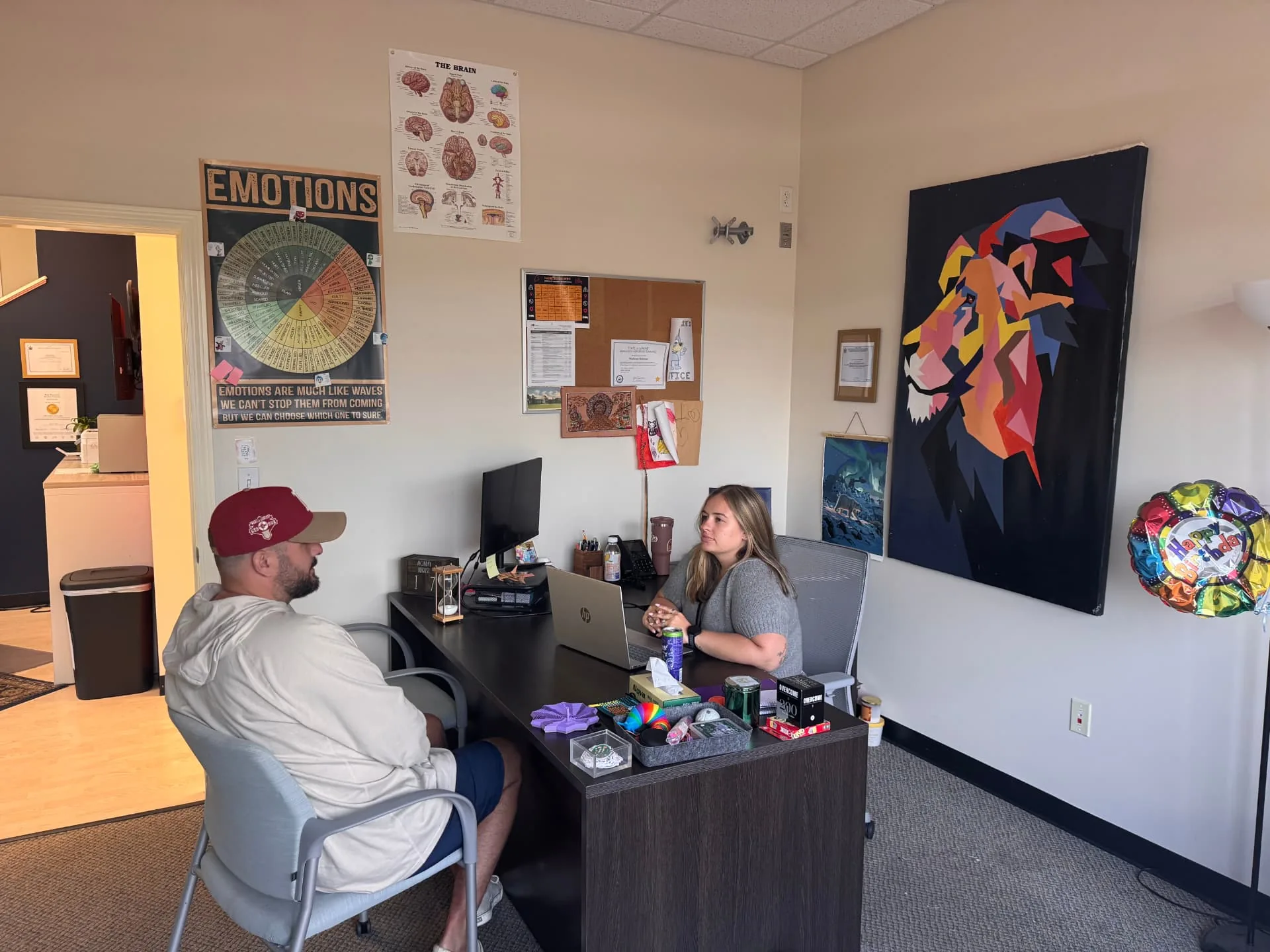
One-on-One Support
Private offices where honest conversations happen between clients and clinicians, safe, confidential, and focused on you.
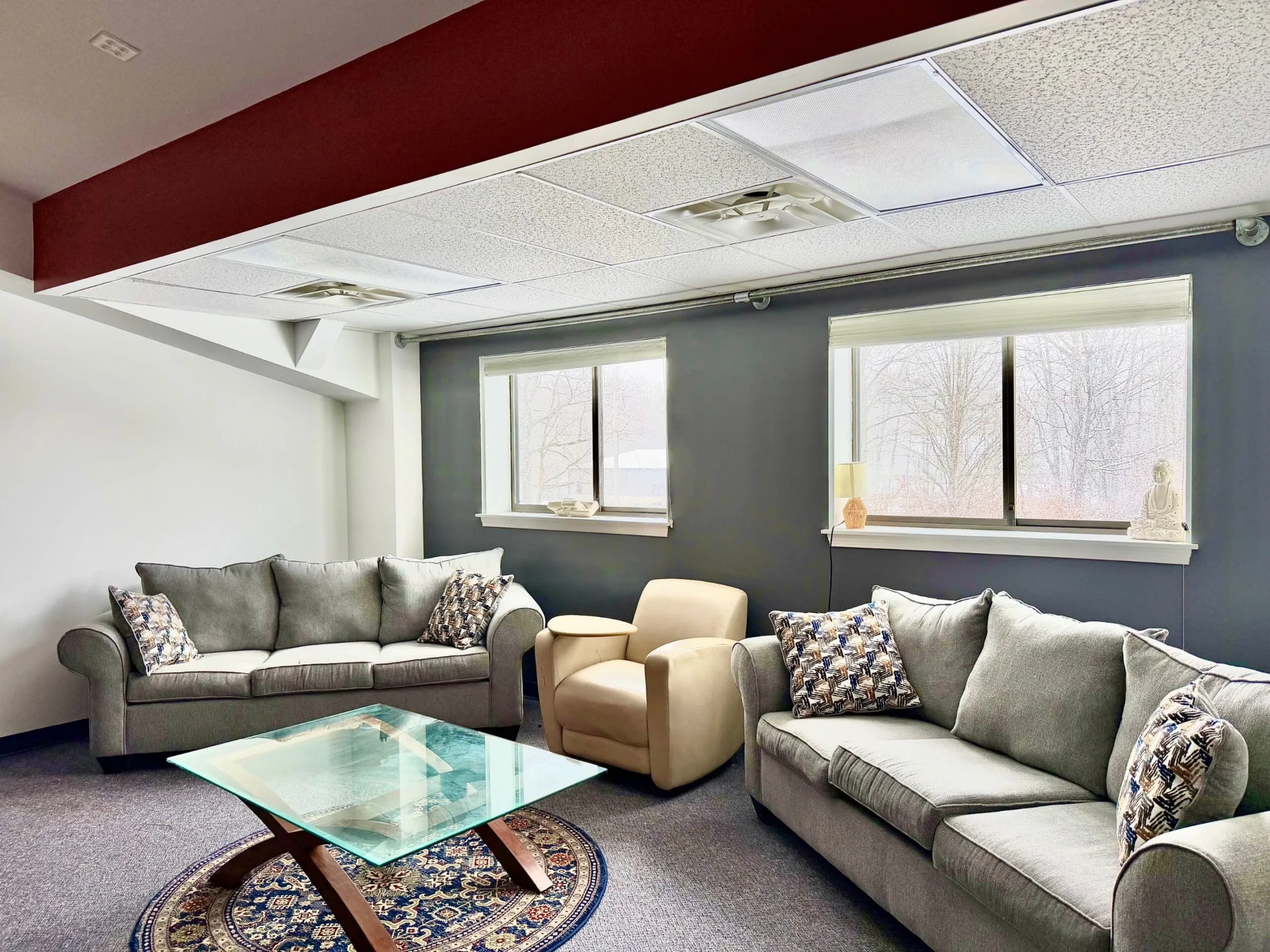
Spaces Made for Connection
Comfortable group lounges where honest conversation happens and community starts to take hold.
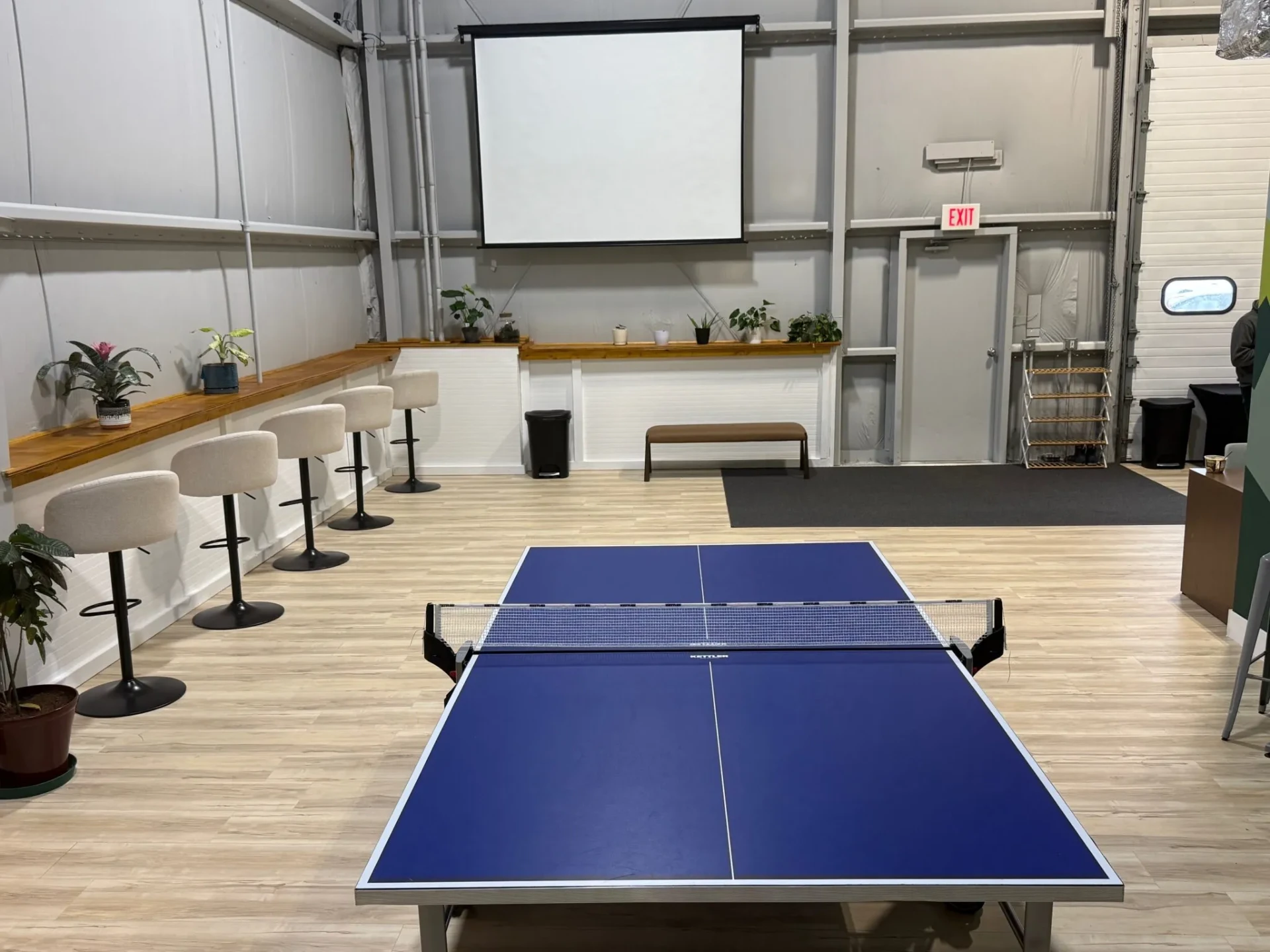
Recovery Beyond the Session
Our community room hosts everything from movie nights to ping-pong tournaments, because healing needs joy, too.

Cocaine rehab near you
Quitting is a night. Staying quit is a community.
Most people can white-knuckle a few days off cocaine. What's hard is the third Friday night, the wedding, the text from an old friend. Recovery that lasts is built where you actually live, with people who understand the same bars, the same jobs, the same winters.
Our center is in Biddeford, roughly twenty minutes down I-95 from downtown Portland, five minutes from Saco, and an easy drive from Old Orchard Beach, Scarborough, South Portland, Westbrook, Kennebunk, Arundel, and Sanford. Day and evening IOP tracks mean you don't have to disappear from your life to save it.
Insurance
In-network with almost every plan.
Portland Treatment is in-network with Anthem, UMR/UnitedHealthcare, Aetna, Harvard Pilgrim, Martin's Point, TRICARE and MaineCare, Cigna is our only out-of-network plan. In-network means contracted rates, lower coinsurance and no balance bill. We verify your benefits free, in minutes, with no obligation.








Free, confidential, no obligation
Or read the coverage guide for your plan, Anthem rehab coverage, Cigna rehab coverage, MaineCare rehab coverage and other accepted insurance plans.
Cocaine treatment questions
- Do I need detox for cocaine?
- Usually not a medical one. Cocaine withdrawal isn't typically dangerous the way alcohol or benzodiazepine withdrawal can be, it's mainly exhaustion, low mood, and intense cravings. Most people start PHP or IOP directly. If you're also using alcohol, opioids, or benzos, we'll assess whether a medical detox with a trusted Maine partner makes sense first.
- Is there a medication for cocaine addiction?
- No FDA-approved medication exists for cocaine use disorder itself. That's why treatment centers on behavioral therapy, CBT and contingency-management approaches have the strongest evidence. We do treat co-occurring conditions like ADHD, depression, and anxiety with medication when appropriate, because those are often what keep the cycle going.
- What's the difference between cocaine and crack treatment?
- Clinically, very little, crack is cocaine in a smokable form, so it hits faster and the binge-crash cycle is tighter, but the treatment approach is the same. What matters more is your pattern of use, what you're using it for, and what else is in the mix.
- I only use on weekends. Is that bad enough for treatment?
- If weekends keep turning into Mondays, if the crash is costing you work or relationships, or if you've tried to stop and couldn't, that's a pattern worth treating. You don't need to be using daily to have a cocaine problem, and earlier treatment is easier treatment.
- Does MaineCare cover cocaine addiction treatment?
- In most cases, yes. MaineCare and nearly all commercial plans cover outpatient treatment for stimulant use disorder, including PHP, IOP, and therapy. We verify your benefits for free, in minutes, with no obligation.
- Can I keep working while in treatment?
- In IOP and outpatient, almost always, we run day and evening tracks specifically so people can keep working. PHP takes most of the day, so many clients use FMLA or short-term leave for that phase and return to work when they step down.
- Where is your cocaine rehab located?
- Our outpatient center is in Biddeford, Maine, about twenty minutes from downtown Portland and easily reached from Saco, Old Orchard Beach, Scarborough, South Portland, Kennebunk, and Sanford.
Sources & references
- 1. SAMHSA, National Survey on Drug Use and Health (2023)
- 2. National Institute on Drug Abuse (NIDA)
- 3. Magill et al., Journal of Consulting and Clinical Psychology (2019)
- 4. Maine Drug Data Hub, Maine DHHS
- 5. NIDA, Principles of Drug Addiction Treatment: A Research-Based Guide
This page is educational and is not medical advice. Research findings describe group averages; individual results vary. If you use cocaine, be aware it may contain fentanyl, carry naloxone and never use alone. If you are in crisis, call or text 988, or dial 911 for an emergency.
Keep exploring
Related care at Portland Treatment
Other conditions we treat
- Alcohol rehab in Biddeford and Portland
Outpatient alcohol treatment with detox coordination.
- Opioid addiction treatment
Therapy, groups and MAT coordination for opioid use.
- Fentanyl rehab in Maine
Why fentanyl requires a different approach to opioid treatment.
- Benzodiazepine addiction treatment
Safe tapers, medical oversight and outpatient support.
Programs that treat it
- Partial hospitalization program (PHP) in Biddeford
Our most structured day treatment, five days a week, home each night.
- Intensive outpatient program (IOP) in Southern Maine
Nine-plus clinical hours a week with day and evening tracks.
- Outpatient program (OP) for ongoing recovery
One to two sessions a week that fit around work and family.
- MAT coordination with local prescribers
We partner with local Suboxone, methadone and Vivitrol prescribers.
Related reading
- Is gabapentin addictive?
Dependence, misuse and withdrawal, explained plainly.
- Is trazodone addictive?
What to know if you were prescribed it for sleep.
- Alcohol detox risks and withdrawal
Why quitting alcohol cold turkey can be dangerous.
- Does insurance cover rehab?
Coverage, costs and what to ask your plan.
Serving Southern Maine
- Addiction treatment for Portland, Maine
A 20-minute drive down I-95 from the Portland peninsula.
- Addiction treatment in Biddeford, Maine
Our home clinic, in the mill district off Route 111.
- Addiction treatment for Saco, Maine
Minutes across the river from our Biddeford clinic.
- All Southern Maine areas we serve
Every city and town within driving distance of Biddeford.
The crash always ends the same way.
The next call can end differently.
855-449-7674Answered 24 hours a day, 7 days a week. Free and confidential.